March 4, 2026
 6 min. read

Ordinal numbers are essential in Class 1 math because they teach children about order and position, not just quantity.
While counting answers “how many,” ordinal numbers explain “which one” comes first, second, or third. This helps children think more logically about numbers and move beyond basic counting.
Learning ordinal numbers also connects math to real-life situations.
For example, when children line up in class, play games, or follow steps in a routine, they naturally use words like first, second, and third. These everyday experiences make it easier for them to understand and remember the concept of order.
This guide shows parents and teachers how to teach ordinal numbers in fun ways. It uses hands-on activities, games, pictures, and simple worksheets.
When Are Class 1 Students Ready to Learn Ordinal Numbers?
Most Class 1 students are ready to learn ordinal numbers once they have basic number sense. This includes recognizing numbers, counting in order, and understanding simple sequences.
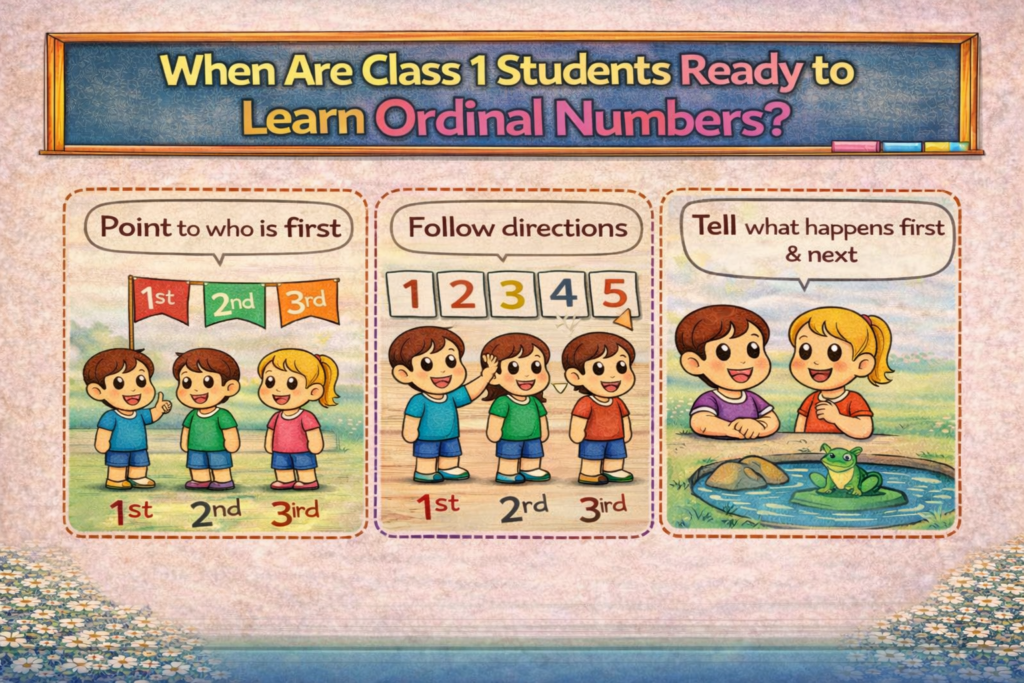
These skills help children see that numbers follow an order, which is key to learning positions like first, second, and third.
Signs of readiness often appear during everyday activities.
For example, children may point to who is first in a game. They may follow directions like “stand second in line.”They can also tell what happens first and next in a story.
These behaviors show they understand order and position, even if they’re still improving their counting skills.
It’s a common misconception that children need to master counting before learning ordinal numbers. In reality, many children naturally understand position through games and daily activities.
Teaching ordinal numbers alongside counting strengthens both skills at the same time.
Step-by-Step Method to Teach Ordinal Numbers
1. Start With Real Objects
Begin with hands-on activities. Line up toys, blocks, or even students and talk about their positions. For example, place teddy bears in a row and ask, “Which one is first? Who is second?”
You can also use classroom items like pencils or books. Arrange five objects and ask children to touch the fourth one. This physical interaction helps children understand ordinal numbers before introducing symbols or worksheets.
2. Use Visual Aids
After children learn order with objects, use visual tools like ordinal number cards, charts, or picture sequences.
For example, use story strips to show events in order—what happens first, next, and last.
Visuals like train cars with position labels or color patterns help children learn order. They link what children do with what they see, making the idea clear.
3. Practice Oral Language
Use ordinal words naturally in daily instructions, such as “The first student may line up” or “The second group collects crayons.”
Play simple call-and-response games like “After first comes…?” or use chants during transitions. These activities build vocabulary and confidence without requiring writing.
4. Introduce Writing Gradually
When children know order using objects and pictures, start simple writing.
For example, have them trace 1st, 2nd, and 3rd, or label pictures like “Circle the third star.”
Keep written activities short and fun. Use tasks like filling in “The ___ pig” or matching pictures to positions. Focus on effort and understanding rather than perfection.
What’s the Easiest Way to Teach Ordinal Numbers?
The easiest way to teach ordinal numbers is through hands-on play with familiar objects. Line up toys like cars, dolls, or blocks and label their positions with cards (1st, 2nd, 3rd).
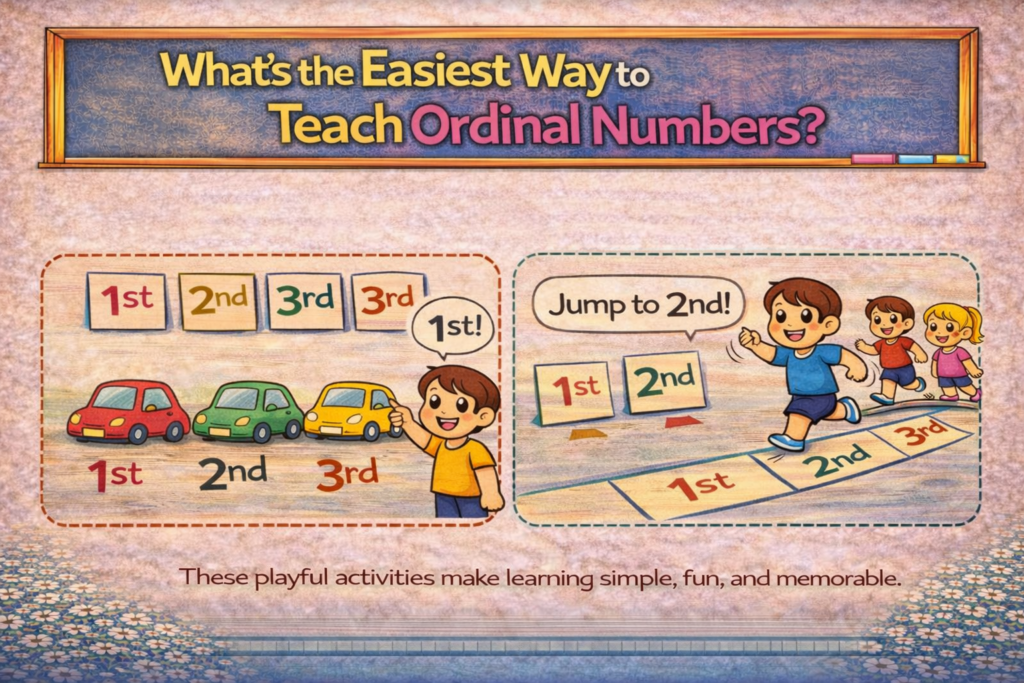
Ask children to point to each object and say its position. Start with 3–5 items and gradually increase the number.
Adding movement makes learning even more effective. For example, children can hop to positions on a taped number line or stand in order during class routines.
These playful activities make learning simple, fun, and memorable.
Fun Activities and Games to Teach Ordinal Numbers
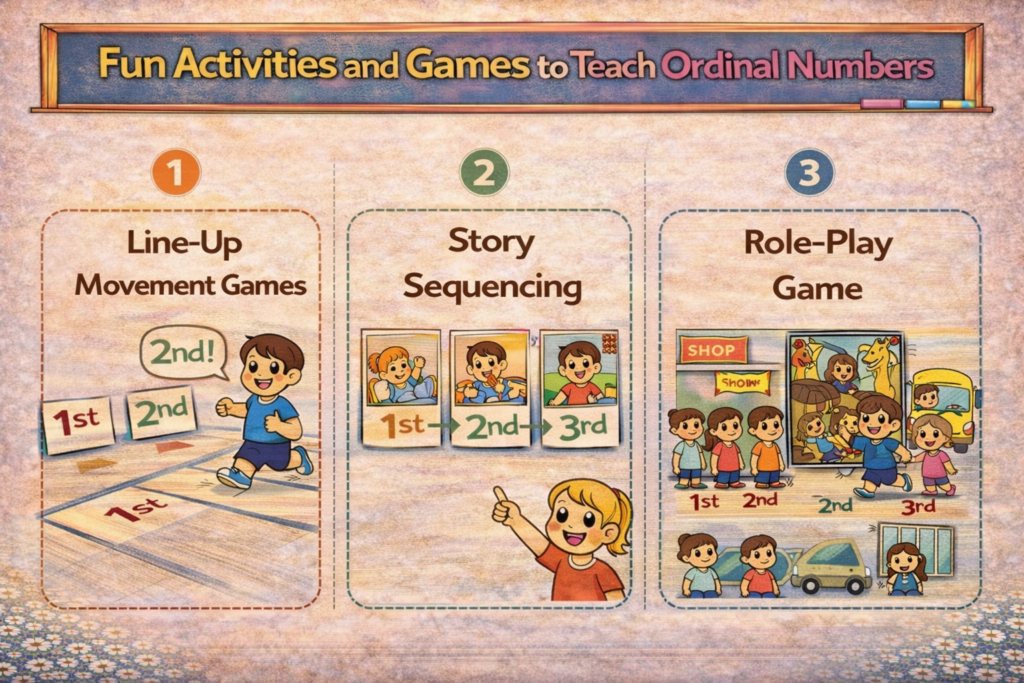
1. Line-Up and Movement Games
Turn lining up into a learning moment. Ask children to say their position aloud—“I am second in line!” You can also tape a number line on the floor and let children hop to a called position. These active games make ordinal numbers fun and easy to remember.
2. Story Sequencing
Use stories to teach order naturally. Read a familiar tale and discuss what happens first, next, and last. Children can act out roles or arrange picture cards in the correct order. This links ordinal numbers to storytelling and sequencing skills.
3. Role-Play Game
Imaginative play makes learning engaging. Set up pretend scenarios like a shop line, a zoo visit, or a bus stop. Children can take turns being the first customer, second animal, or third passenger. Role-play helps children use ordinal numbers in meaningful ways.
Helping Children Who Struggle With Ordinal Numbers
It’s normal for some children to struggle with ordinal numbers. Keep learning simple and positive.
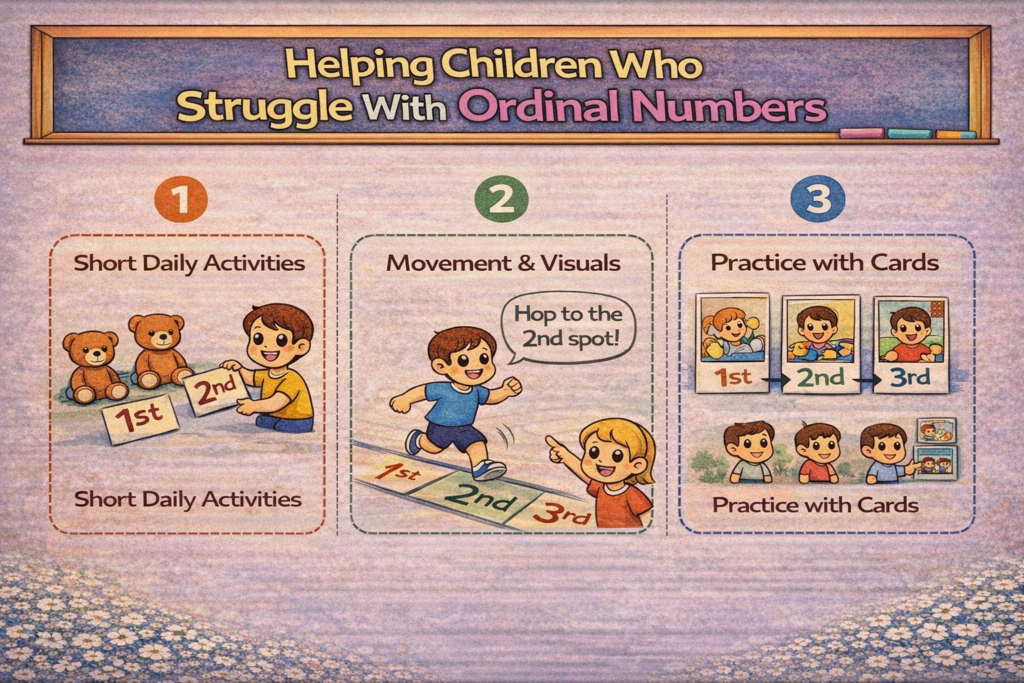
Start with just first, second, and third, as these are the most common and easiest to remember.
Use short, daily activities like lining up toys, simple races, or turn-taking games. Avoid long worksheets, which can frustrate children.
Combine movement and visuals to reinforce learning. For example, ask children to hop to the second spot, stand in the third place, or point to picture cards showing order. When children move, see, and say the position, they learn more effectively.
With patience and playful practice, children can build confidence and make steady progress.
How to Assess Ordinal Number Understanding?
You don’t need formal tests to assess ordinal numbers. The best way is to observe children during play and daily routines.
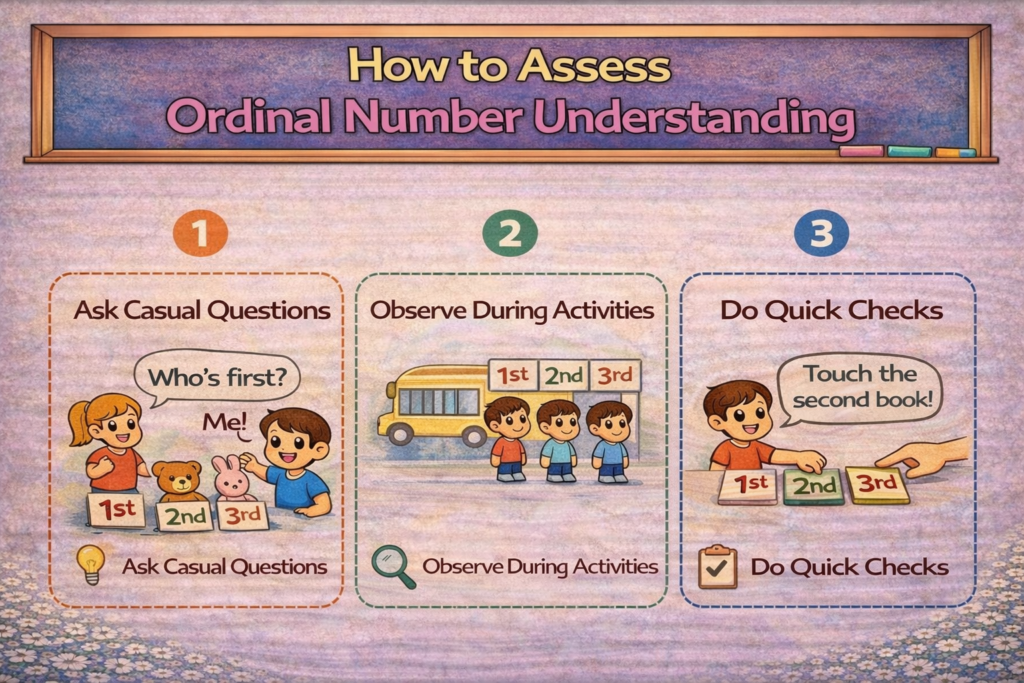
Ask casual questions like, “Who is first in our toy line?” or “What comes after second in the story?” Look for quick, confident answers.
Watch how children use ordinal numbers in daily activities, like lining up or following directions.
You can also do short checks, such as asking them to touch the second book or circle the first fish. Always give positive feedback to encourage learning.
Why Do Children Confuse Ordinal and Cardinal Numbers?
Children often confuse ordinal and cardinal numbers because they first learn numbers as a sequence (1, 2, 3, 4), like a song.
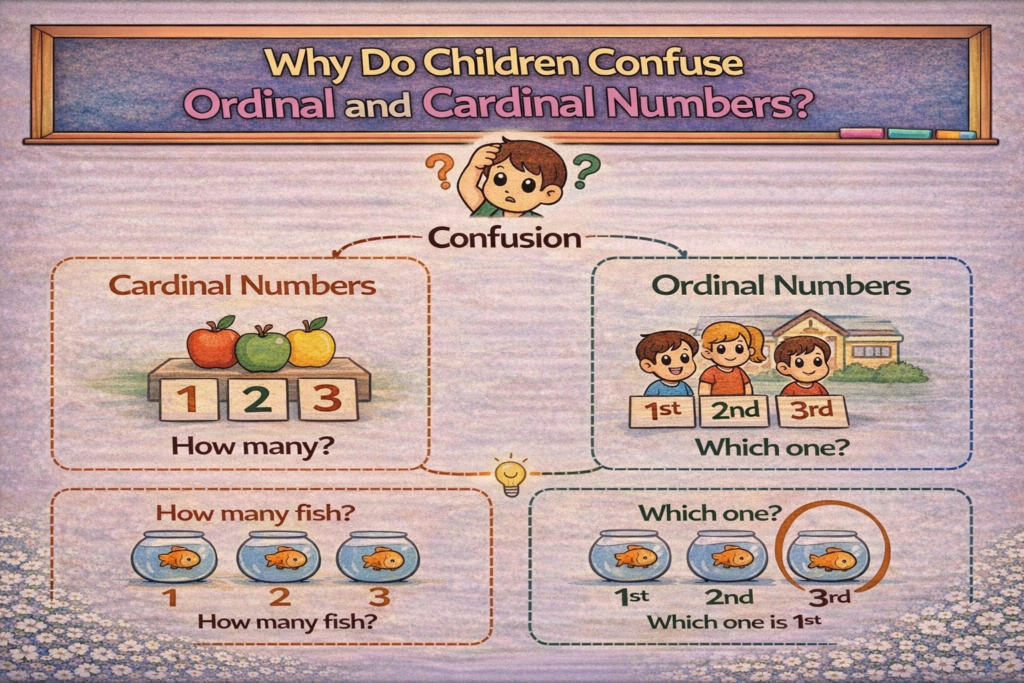
This focus on order can blur the difference between counting how many (cardinal) and identifying position (ordinal).
This confusion is normal in Class 1. Teachers can help by clearly contrasting the two concepts.
For example, ask “How many?” for cardinal numbers and “Which one?” for ordinal numbers. With practice, children will understand the difference.
Make Preparing for Math Olympiad Simple!



Conclusion
Teaching ordinal numbers to Class 1 students is most effective when it’s hands-on, playful, and connected to real life.
Simple activities like lining up toys and using pictures make learning fun. Patience and repetition are key.
These simple steps help parents and teachers build children’s confidence. Children also learn ordinal numbers well. This prepares them for future math with curiosity and interest.