 December 8, 2025
 6 min. read

Teaching number line maths to Class 1 students is most effective when it builds on the number sense they already have, counting real objects, comparing “how many,” and noticing which group is bigger or smaller.
A number line transforms these early ideas into a clear visual model, helping children see number order, size, and distance rather than just reciting a list of numbers.
A well-taught number line turns abstract numbers into something children can interact with.
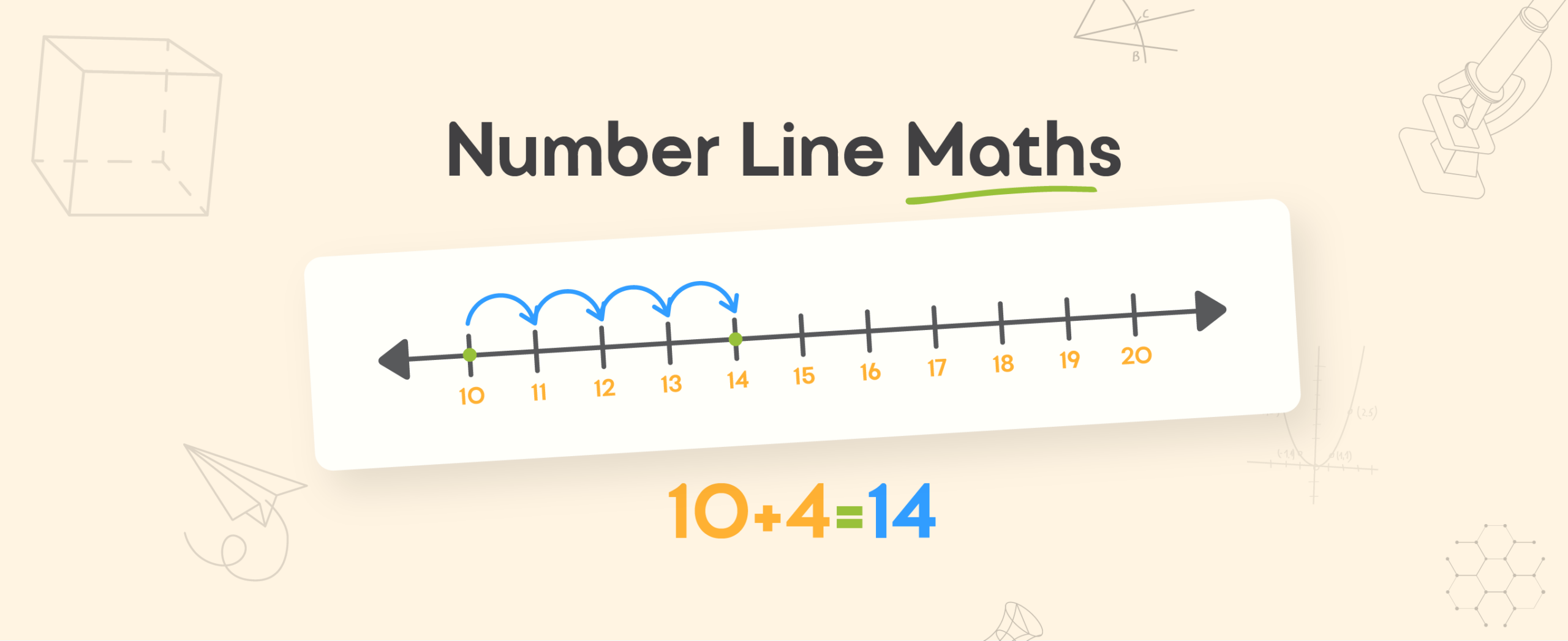
Introducing a Simple Number Line helps them visualize how numbers increase, decrease, and relate to each other, making early addition and subtraction much more intuitive.
Step-by-Step Teaching Approach
Teaching number line maths to Class 1 students becomes simple and effective when we move from real objects to visual number lines.
Here are the steps to draw a number line for Class 1.
Below is a clear, child-friendly approach that builds strong number sense at every step.
1. Start With Real Objects
Before introducing a number line, children need to see and touch real quantities.
Concrete objects help them understand that numbers represent actual amounts, not just symbols on paper.
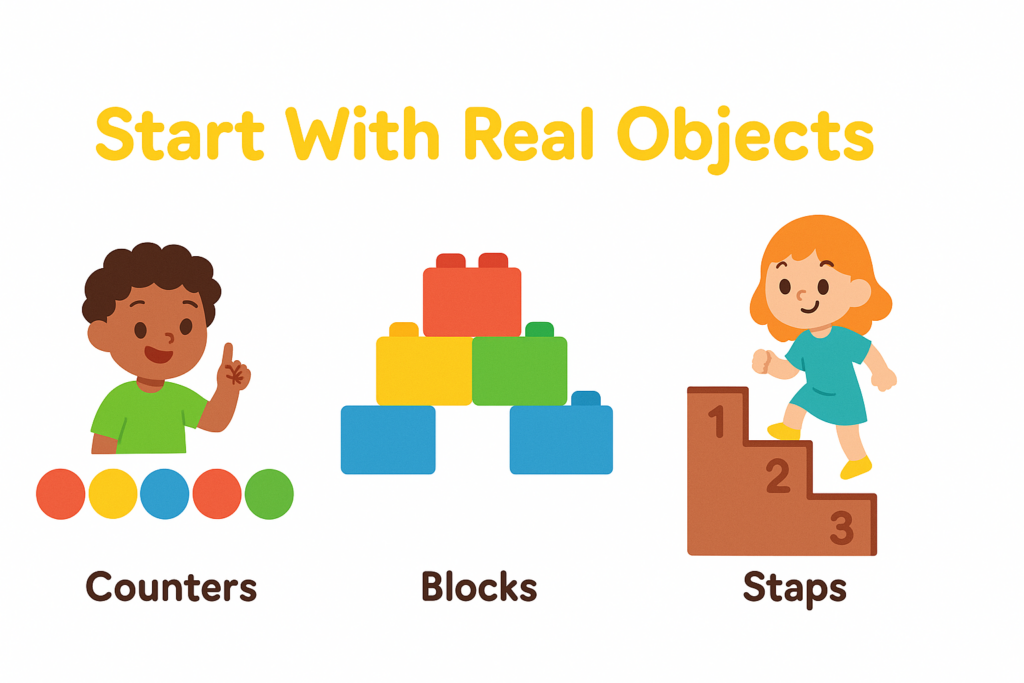
Using Counters
Offer children small items like:
- buttons
- counters
- bottle caps
- beads
Ask them to line the objects in a row and count them one by one. This helps them see how numbers increase as the quantity increases.
Using Blocks
Blocks are excellent for early math because children naturally enjoy building and arranging them.
Try activities such as:
- making towers with a set number of blocks
- lining blocks in a row to form a sequence
- comparing which group has more or fewer blocks
Using Steps
Stair steps act like a natural number line.
Ask children to:
- count each step as they climb
- move up or down to practice forward and backward counting
- stop on the step representing a number you call out
This physical movement reinforces the idea that numbers go up and down, just like steps.
2. Introduce a Simple Number Line
Once children understand quantities with objects, introduce a small, simple number line. For Class 1, a 0–10 number line is the perfect starting point.
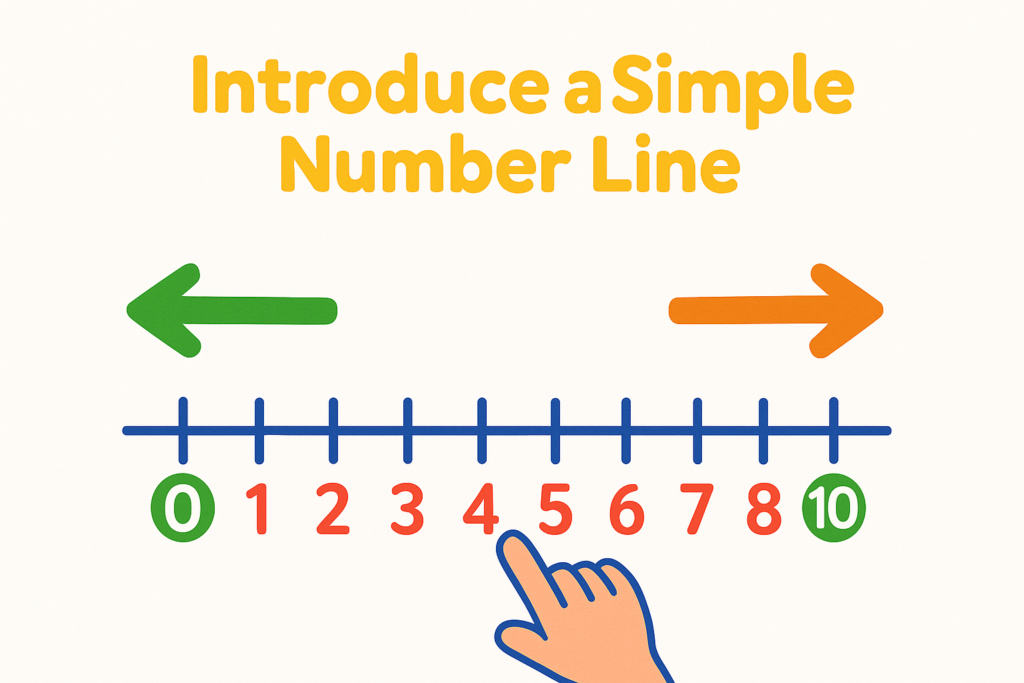
Use a 0–10 Number Line
A short number line is ideal because:
- the numbers are familiar
- counting is easy
- it supports early addition and subtractio
Explain that each number has its own place, just like steps on a staircase.
Demonstrate Direction
Help children understand how to move along the line:
Numbers Increase to the Right
Points from 0 toward 1, 2, 3…
Say: “When we move right, the numbers get bigger.”
Numbers Decrease to the Left
Point backward along the line.
Say: “When we move left, the numbers get smaller.”
Model the movement slowly using your finger or a counter so children follow visually.
3. Practice Counting on the Number Line
Now let students practice moving along the number line. This helps them understand number order and strengthens counting fluency.
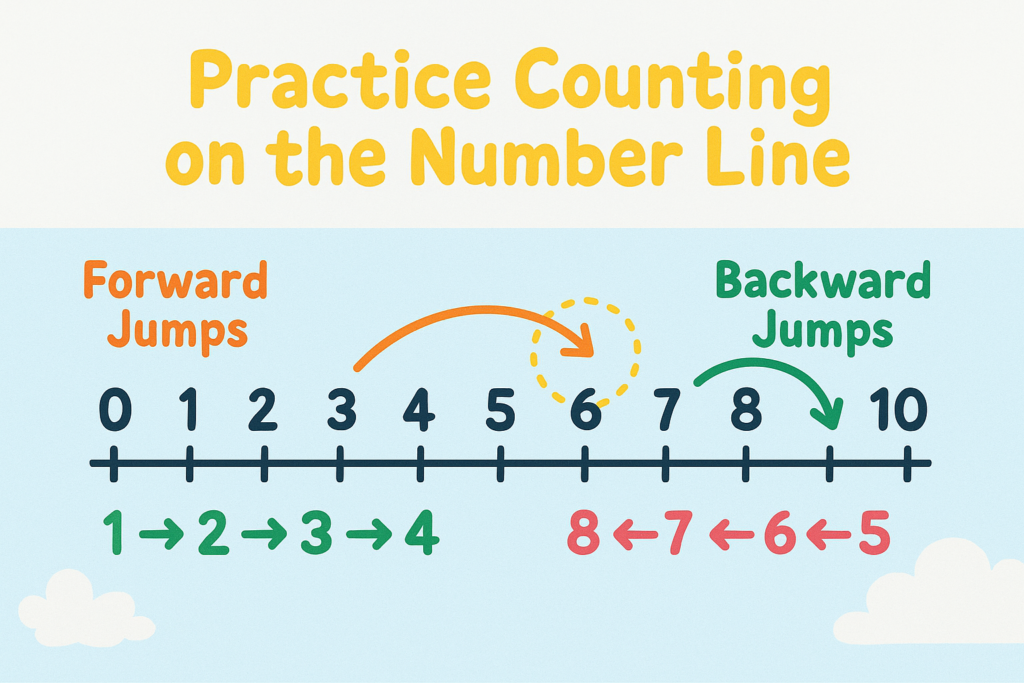
Forward Jumps
To count forward:
- start at 0 or any number
- jump one tick at a time
- say the numbers as you land:
“1… 2… 3… 4…”
Children begin to see that numbers get bigger as they move right.
Backward Jumps
To count backward:
- start on a higher number
- jump one tick back
- say the numbers aloud:
“8… 7… 6… 5…”
This builds early subtraction understanding.
4. Teach Simple Addition Using Jumps
Number lines make addition easy and visual.
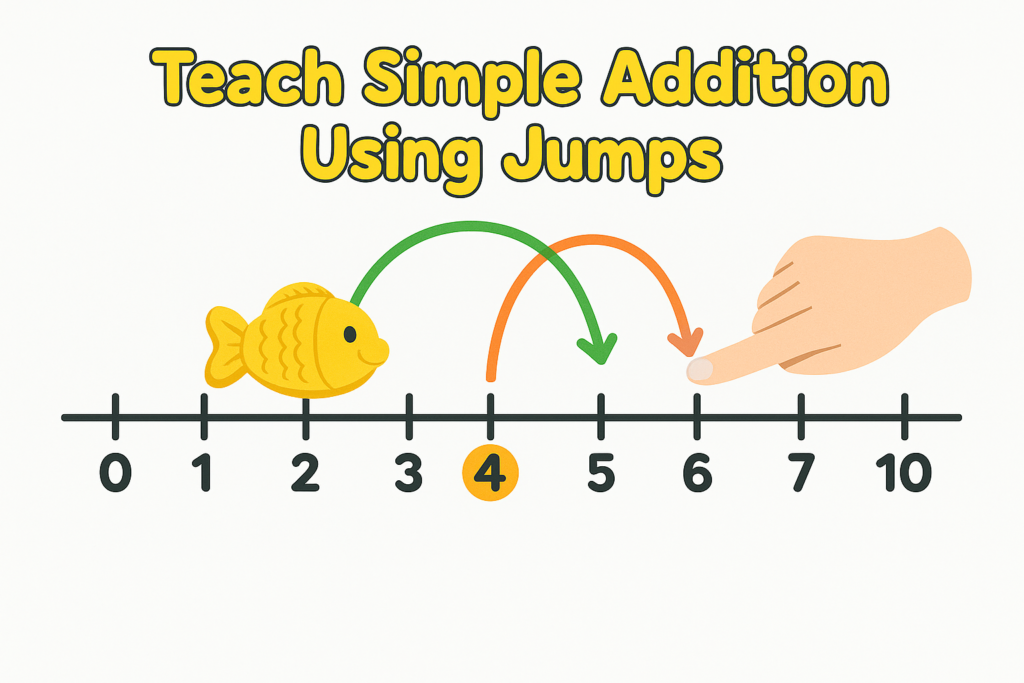
Example: 3 + 2
- Start at 3
- Jump 2 steps forward
- Land on 5
- Say: “Three plus two equals five.”
Use a finger, small toy, or counter to demonstrate clearly.
5. Teach Simple Subtraction Using Jumps
Subtraction becomes much clearer when children see numbers moving backward.
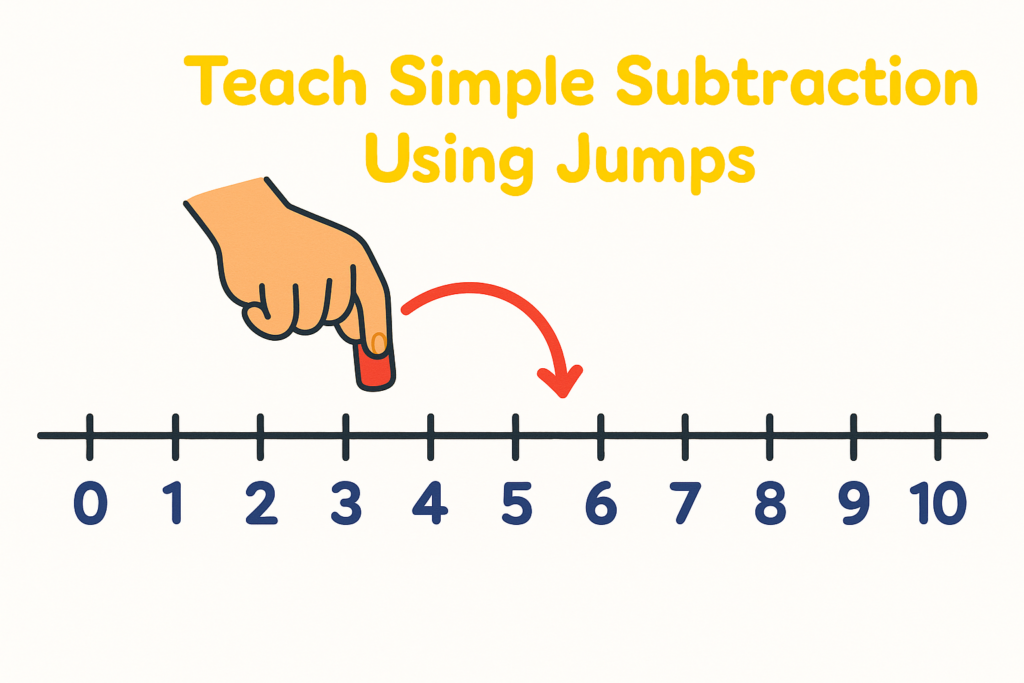
Example: 5 – 1
- Start at 5
- Jump 1 step backward
- Land on 4
- Say: “Five minus one equals four.”
Encourage children to try it themselves.
6. Encourage Independent Exploration
After guided practice, let children explore the number line on their own. This builds confidence, curiosity, and flexible thinking.
Student-Led Jumping
Give simple instructions:
- “Start at 4 and make 3 jumps forward.”
- “Start at 8 and jump back 2 steps.”
- “Where do you land if you start at 6 and jump once?”
Let children choose starting numbers too—this boosts independence.
Ask “What Comes Next?”
Ask questions that strengthen number sense:
- “What comes after 7?”
- “What number is two steps before 5?”
- “If you move forward from 3, where do you land?”
Use Games and Activities
Games make number line maths fun, active, and easy to remember.
When Class 1 children learn through play, they feel confident, engaged, and excited to practice counting, jumping, and solving problems.
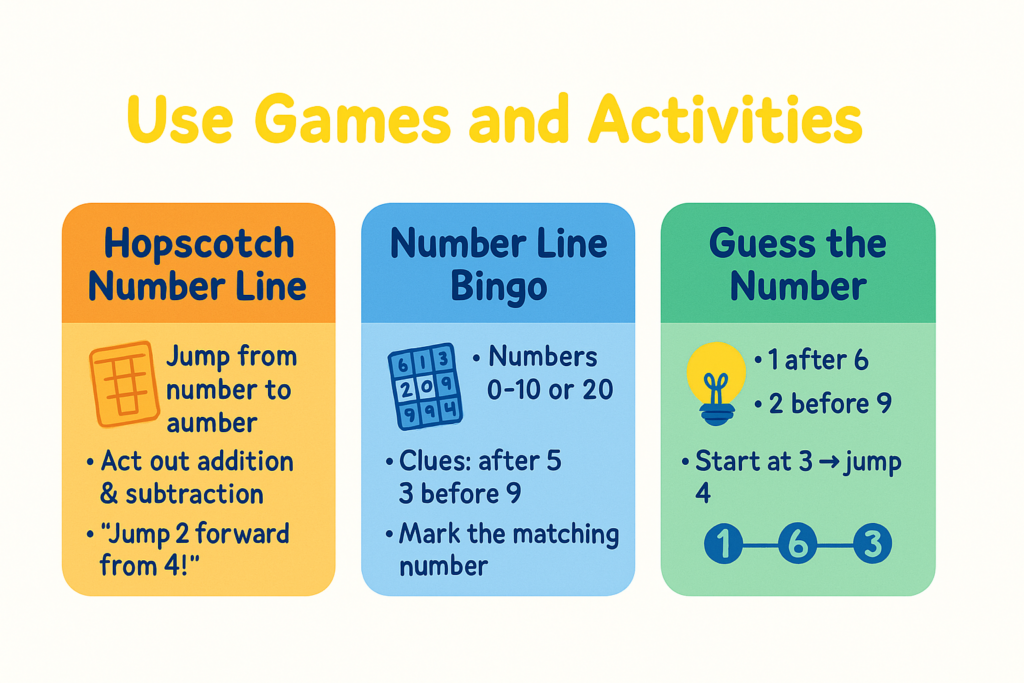
Hopscotch Number Line
Create a large number line on the floor or playground using chalk or tape. Children can:
- jump from one number to the next,
- act out addition or subtraction problems,
- follow directions such as: “Jump 2 steps forward from 4!”
This physical movement is perfect for visual and kinesthetic learners. It helps them understand number order and forward/backward jumps in a playful way.
Number Line Bingo
Give each child a mini number line or bingo card with numbers 0–10 or 0–20.
Call out clues such as:
- “A number that comes after 5,”
- “A number 3 steps before 9,”
- “The answer to 2 + 4.”
Children mark the matching number on their cards. This game reinforces number relationships, counting skills, and simple problem-solving.
Guess the Number
Give students clues and let them find the mystery number on their number line.
Examples:
- “I am 1 step after 6.”
- “I am 2 jumps before 9.”
- “Start at 3 and jump forward 4 times—what number do you land on?”
This activity strengthens logical thinking and encourages independent use of the number line.
Common Mistakes & How to Fix Them
Young learners often make predictable mistakes when first using a number line.
Correcting these early helps build accuracy, confidence, and strong number sense.
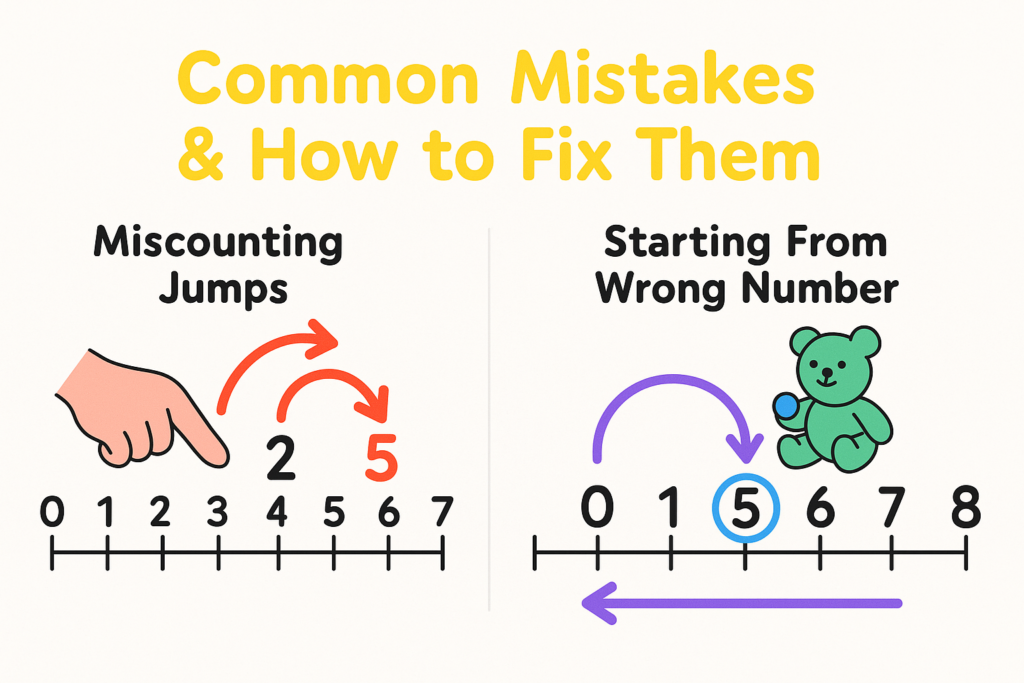
Miscounting Jumps
A common mistake is counting the starting number as the first jump.
Example: 3 + 2
Children might count:
“3… 4…” → landing on the wrong answer.
How to Fix It
Teach this simple rule:
“We start ON the number, but the FIRST jump takes us to the next number.”
Model it clearly:
- Start at 3
- First jump → 4
- Second jump → 5
Repeat with a finger, counter, or small toy to reinforce the idea.
Starting From the Wrong Number
Some children begin jumping from the wrong place—often from 0 or another random number.
Example:
For 5 – 1, they might mistakenly start at 0.
How to Fix It
- Highlight or circle the starting number.
- Use a sticker or counter to mark where to begin.
- Ask: “Where do we start?” before each problem.
This simple habit encourages careful thinking and reduces mistakes.
Make Preparing for Math Olympiad Simple!



Final Thought
Teaching number line maths to Class 1 students is a simple but powerful way to strengthen early number sense.
By starting with real objects, introducing a clear 0–10 number line, and practicing forward and backward jumps, children learn how numbers grow, shrink, and relate to one another.
This early understanding becomes a strong foundation for future math skills, problem-solving, and overall mathematical confidence.