 December 9, 2025
 6 min. read

Drawing a number line for Class 1 is a simple and effective routine that helps young learners make sense of numbers.
If your child is new to number lines, you may want to start by understanding What a Number Line Is for Class 1 Students
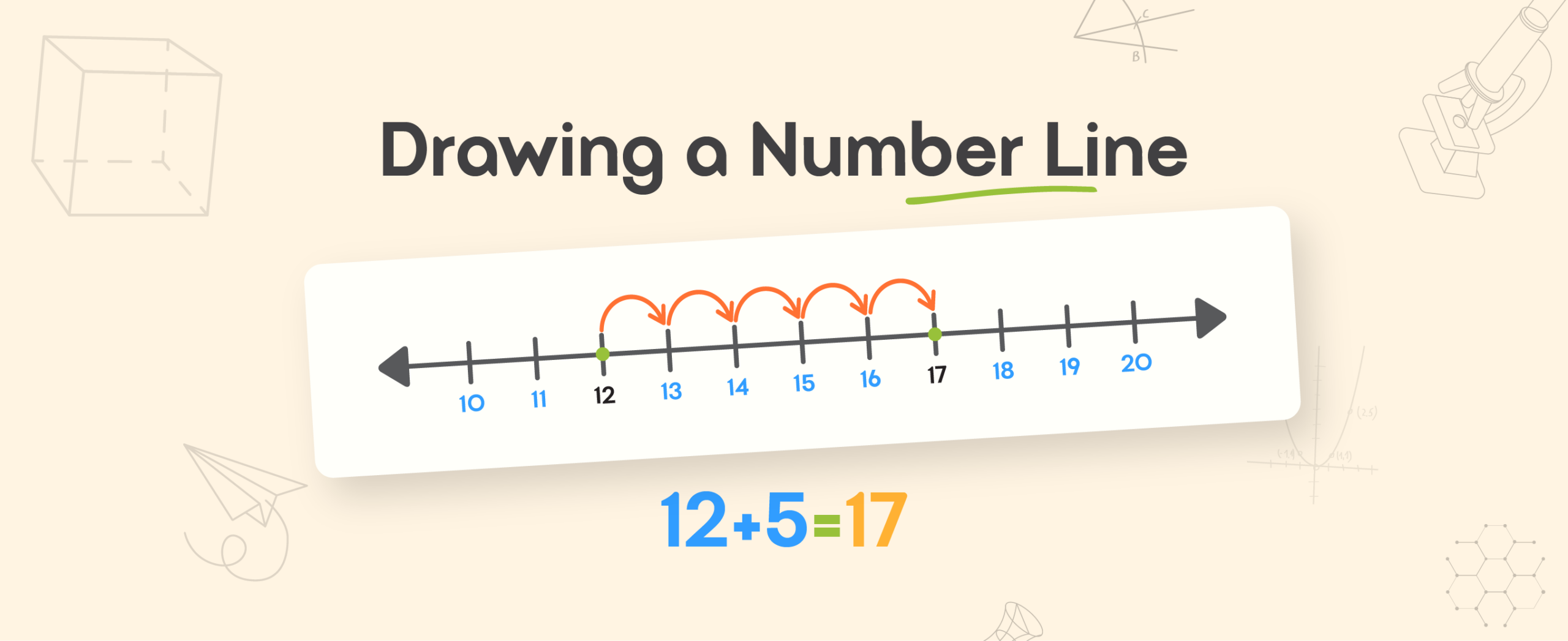
To draw a straight horizontal line, start by using a ruler. Then add evenly spaced “ticks” and label each one clearly with numbers, usually 0–10 or 0–20.
A number line turns abstract ideas like more, less, before, and after into something children can actually see and touch.
Understanding number positions is essential, so you can also explore How to Explain Number Positions on a Number Line for Class 1 Math to strengthen this concept.
Step-by-Step Instructions to Draw a Number Line for Class 1
Drawing a number line is an easy routine that helps Class 1 students understand number order, counting, and simple operations.
These steps also support the development of strong number sense—something explained clearly in our article on Number Sense Characteristics for Class 1.
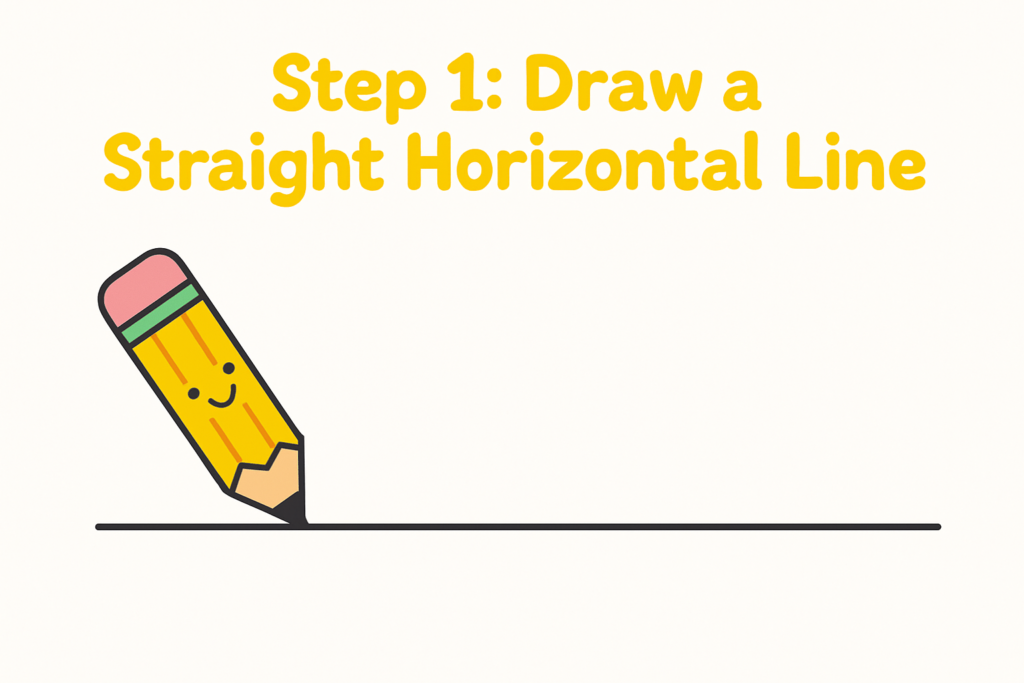
Step 1: Draw a Straight Horizontal Line
Use a ruler to draw a neat, straight line across the page. This line becomes the “path” where numbers will be placed.
Leave space at both ends so you can mark your starting and ending numbers (for example, 0 to 10 or 0 to 20).
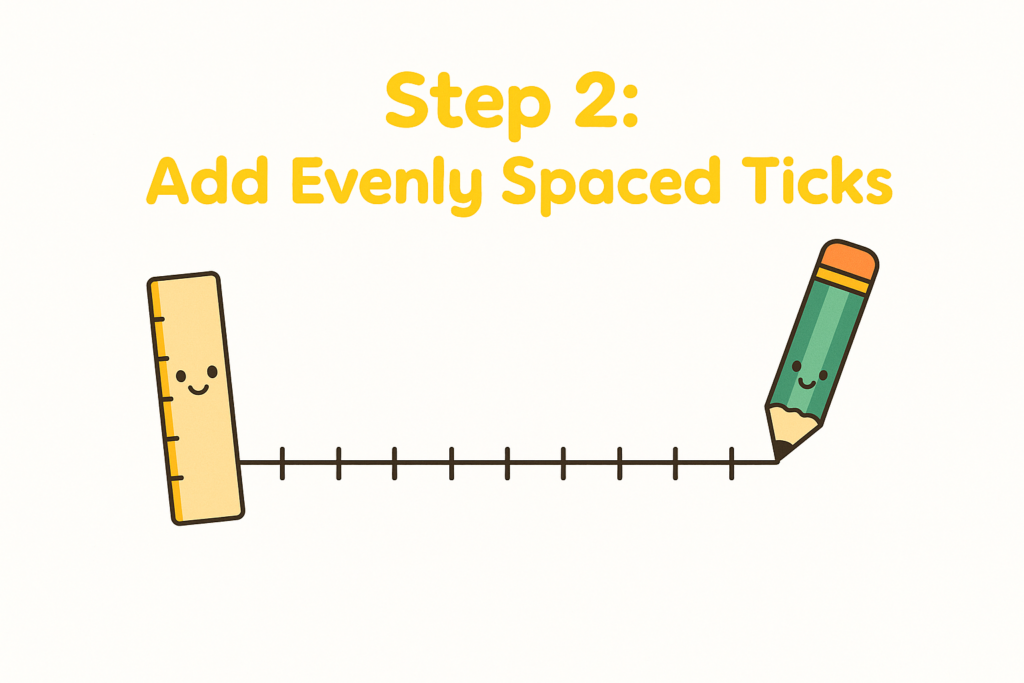
Step 2: Add Evenly Spaced Ticks
Mark small vertical lines (ticks) at equal distances.
Equal spacing shows children that the jump from 1 to 2 is the same size as the jump from 4 to 5.
If you’d like to teach children how these jumps relate to operations, see our guide How to Teach Number Line Maths to Class 1 Students.
Explain to students:
“Each tick is one step. All steps are the same size.”
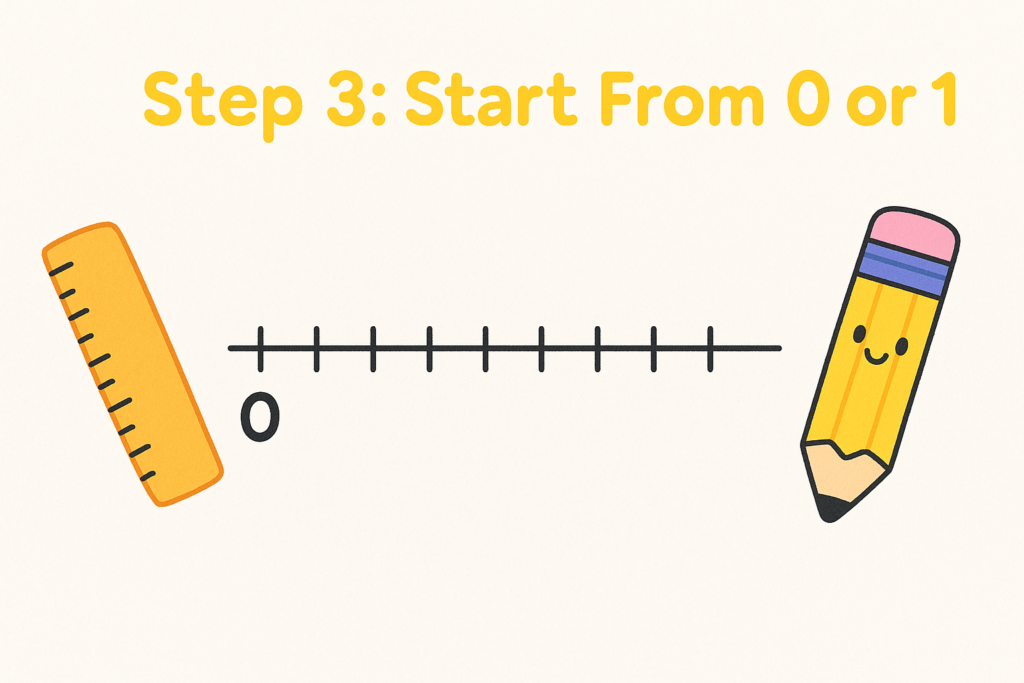
Step 3: Start From 0 or 1
Choose your starting number based on the lesson:
- Start at 0 for counting, addition, subtraction, and comparison.
- Start at 1 for number order, sequences, and basic counting practice.
Write the first number neatly under the leftmost tick and explain that numbers grow as we move to the right.
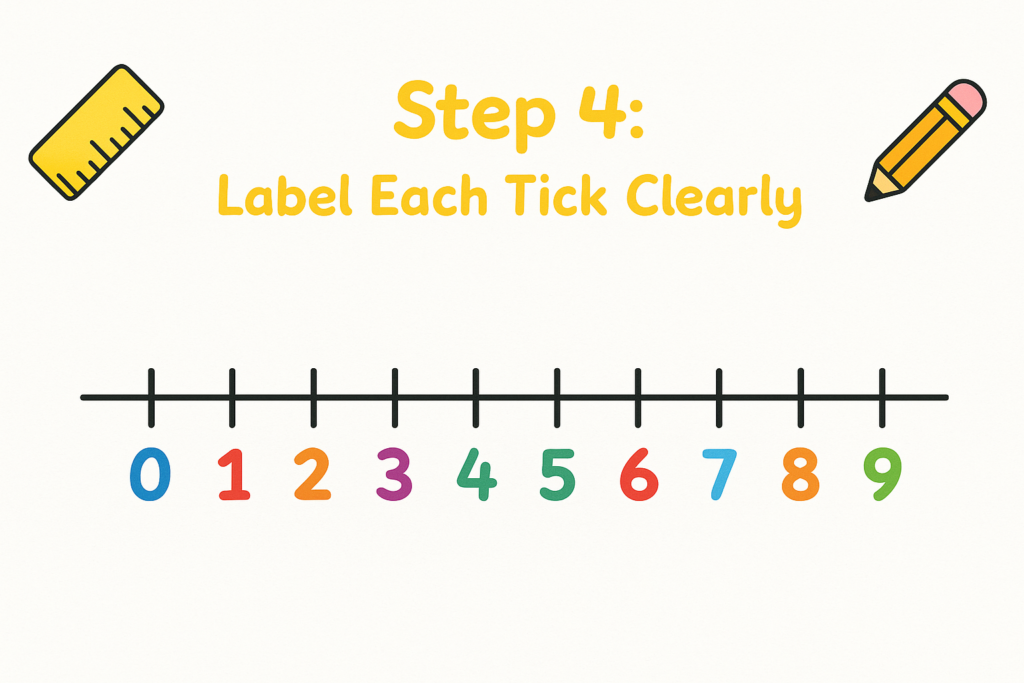
Step 4: Label Each Tick Clearly
Write the numbers under each tick in order:
0, 1, 2, 3, 4… (or 1, 2, 3…)
Use clear, large digits so children can read them easily.
Ask students to read the numbers aloud from left to right—this helps them connect spoken counting to fixed positions on the line.
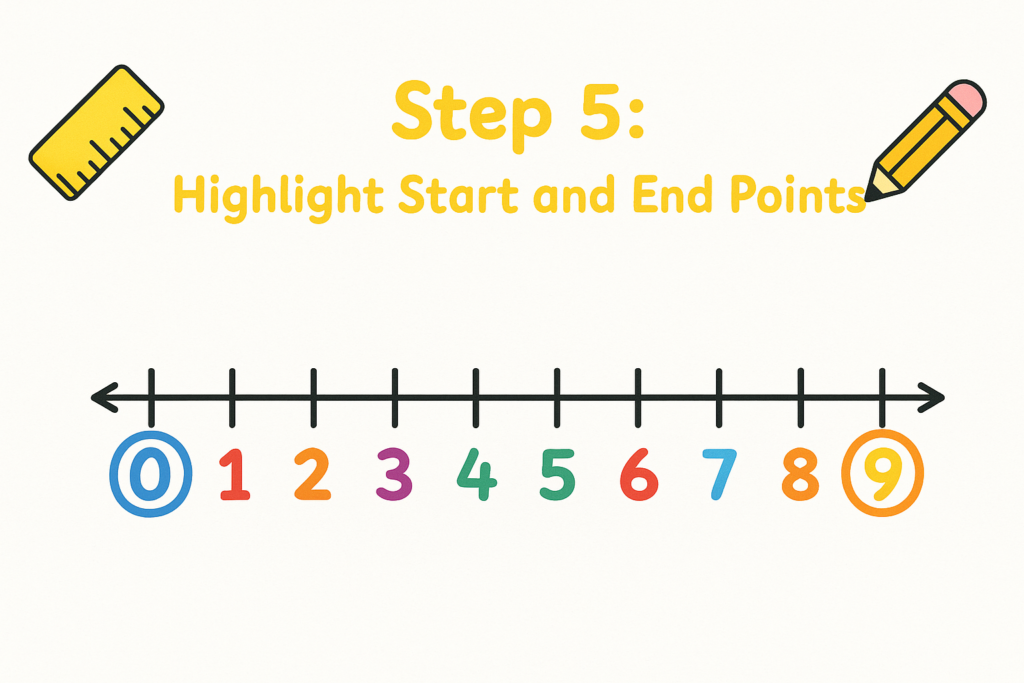
Step 5: Highlight Start and End Points
Circle, box, or lightly color the first and last numbers to show the range of the number line.
Examples:
- 0–10 for beginners
- 0–20 once they gain confidence
You may add tiny arrows at the ends to show that numbers continue beyond the classroom line.
Step 6: Demonstrate How to Use the Number Line
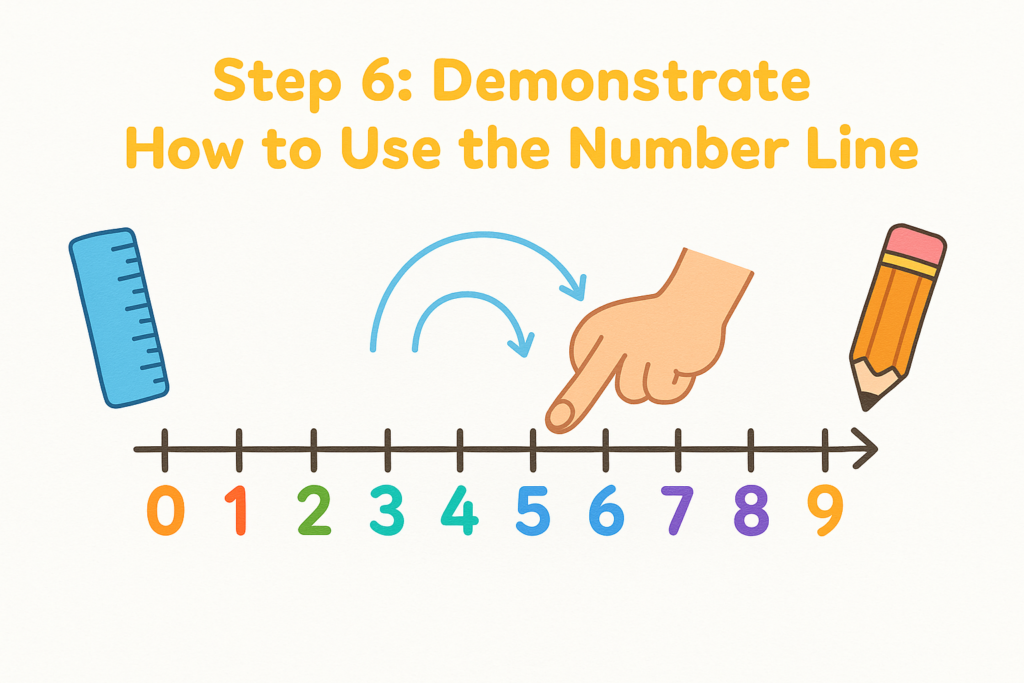
Model how to use the number line with simple tasks:
Counting
Place a finger or counter on 0 (or 1) and jump one tick at a time, saying the numbers out loud.
Explain that each jump is “one more.”
Finding Positions
Ask:
- “Show me where 7 is.”
- “Point to the number that comes after 4.”
Addition
- Start at 3, jump forward 2 → land on 5.
- Say: “3 plus 2 equals 5.”
Subtraction
- Start at 5, jump back 1 → land on 4.
- Say: “5 minus 1 equals 4.”
These demonstrations help children understand how numbers increase, decrease, and move in order along the line.
Quick Table Summary to Draw a Number Line
| Step | What to Do (For Class 1) |
| Draw line | Use a ruler to draw a straight horizontal line with space at both ends. |
| Add evenly spaced ticks | Mark small vertical ticks at equal distances. |
| Choose start (0 or 1) | Pick 0–10 / 0–20 or 1–10 / 1–20 based on lesson goals. |
| Label each tick | Write neat, clear numbers under each tick in order. |
| Highlight ends | Circle or color 0 and 10 (or 20) to show the range. |
| Model using the line | Show counting jumps, positions, addition, and subtraction. |
Tips for Teachers and Parents
These simple strategies make number line learning more engaging, clear, and effective for Class 1 children.
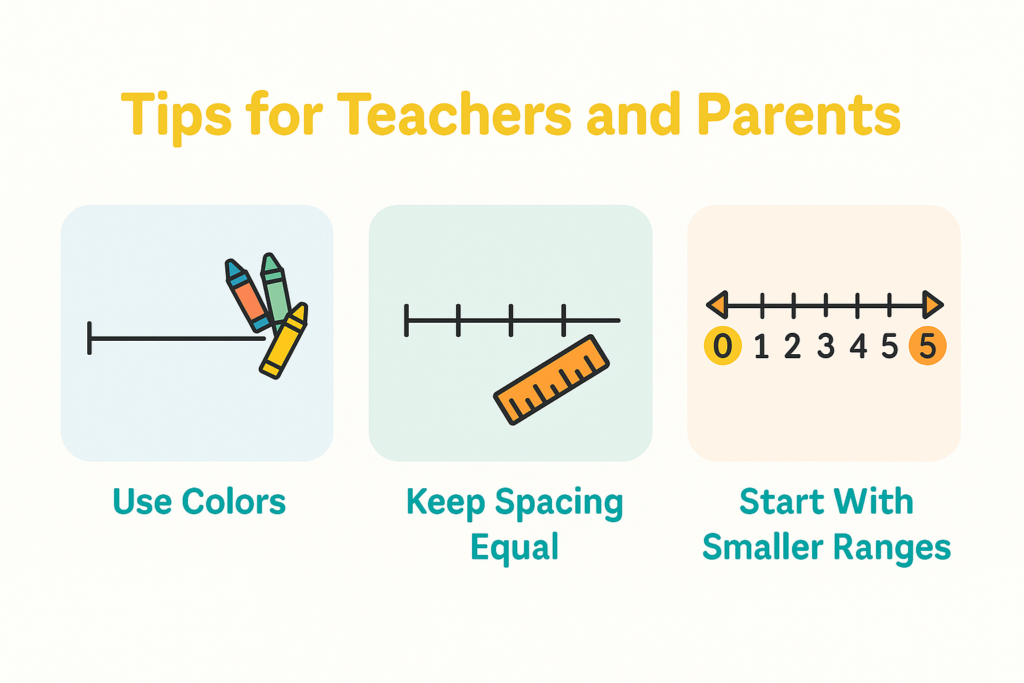
- Use Colors
Using different colors helps young learners focus and understand the structure of the number line.
Try color-coding to make concepts stand out:
- one color for the line,
- another for the ticks and numbers,
- and bright colors for jumps or special points.
For example:
Red for numbers, blue for ticks, green for jumps.
You can even highlight important points like 0, 5, and 10 to help children see patterns.
- Keep Spacing Equal
Equal spacing between ticks is crucial.
Tell children: “Each step is one.”
This helps them understand that every gap between numbers is the same, which is the foundation of number line maths.
If a child draws uneven ticks, gently guide them to use a ruler or guide dots so they naturally learn that equal steps = equal counts.
- Start With Smaller Ranges
Begin with short, manageable number lines such as 0–5, 0–10, or 0–20.
Smaller ranges help children see and count numbers without feeling overwhelmed.
Once they are confident, extend the line to 0–20 or 0–30 and explain that the number pattern continues in the same way.
Practice Ideas for Students
Hands-on activities help Class 1 students understand number lines deeply and build strong number sense.
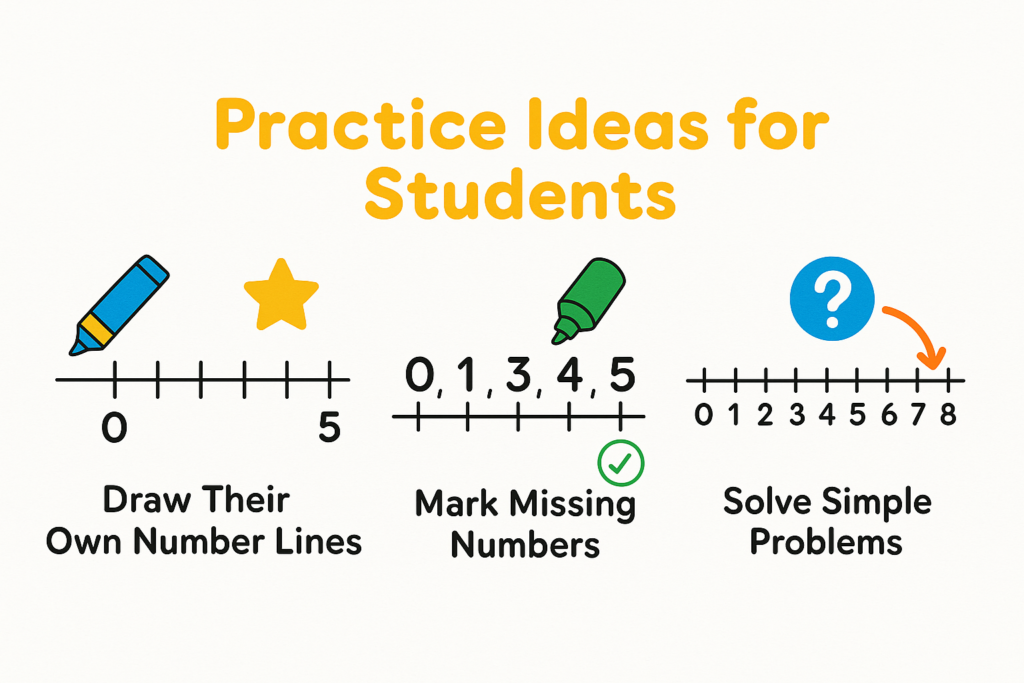
- Draw Their Own Number Lines
Let children draw a straight line, add 6–11 ticks, and label numbers from 0–5 or 0–10.
Check that:
- ticks are evenly spaced,
- numbers are in the correct order.
Encourage them to decorate the start and end points with stars or boxes.
This builds number ownership and reinforces spacing.
- Mark Missing Numbers
Give students number lines with missing digits, for example:
0, 1, __, 3, __, 5, __
Ask them to fill in the blanks while saying the counting sequence aloud.
This reinforces:
- before/after,
- number order,
- forward and backward counting.
For an extra challenge, show only 0 and 5, or 0 and 10, and ask:
“What should come in between?”
- Solve Simple Problems
Use short, friendly story problems to bring the number line to life:
- “You are on 3. Jump 2 steps forward. Where do you land?”
- “Show me 8 – 2 on the number line.”
- “Which number is 2 steps after 5?”
You can also build comparison skills:
- “Circle 7. Now mark the number just before it and just after it.”
- “Point to a number bigger than 4 but smaller than 8.”
These exercises help students connect counting, comparison, addition, and subtraction in a fun, visual way.
Make Preparing for Math Olympiad Simple!



Conclusion
Drawing a number line is a simple, hands-on strategy that helps Class 1 students understand how numbers work, where they belong, and how they relate to one another.
When children learn to draw a straight line, add evenly spaced ticks, and label numbers clearly, they begin to see number order, counting patterns, and the meaning behind “before,” “after,” “more,” and “less.”
When teachers and parents model neat number lines and encourage children to create their own, this simple visual becomes a reliable thinking tool that supports all future maths learning.