February 27, 2026
 6 min. read

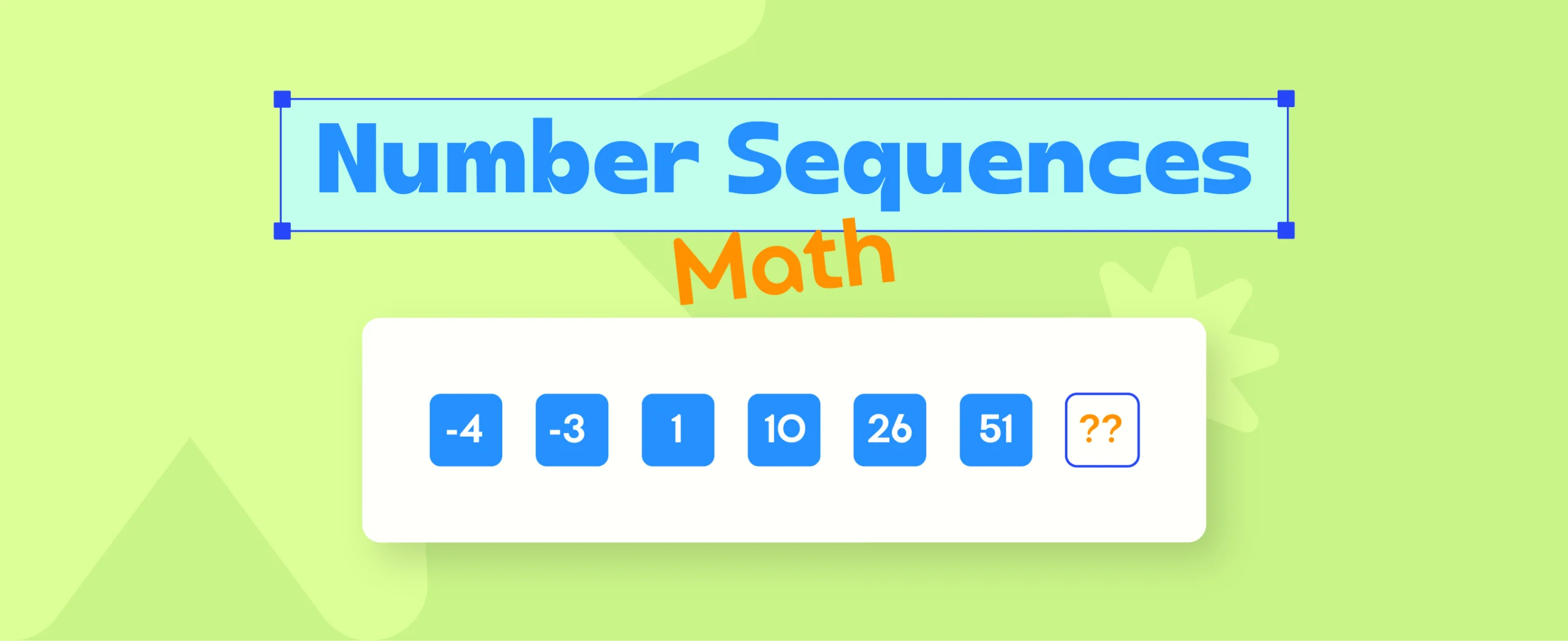
Number sequences are a key part of Class 1 math. Before children can learn to add or subtract, they need to understand that numbers follow a specific order.
Practicing number sequences helps kids develop number sense and boosts their confidence in counting.
Activities like counting forward, backward, and skip-counting by 2s, 5s, and 10s make numbers easier to understand.
The best way to teach number sequences is through hands-on activities and visual tools. This guide offers simple, fun ideas for parents and teachers to use at home or in the classroom.
When Are Class 1 Students Ready to Learn Number Sequences?
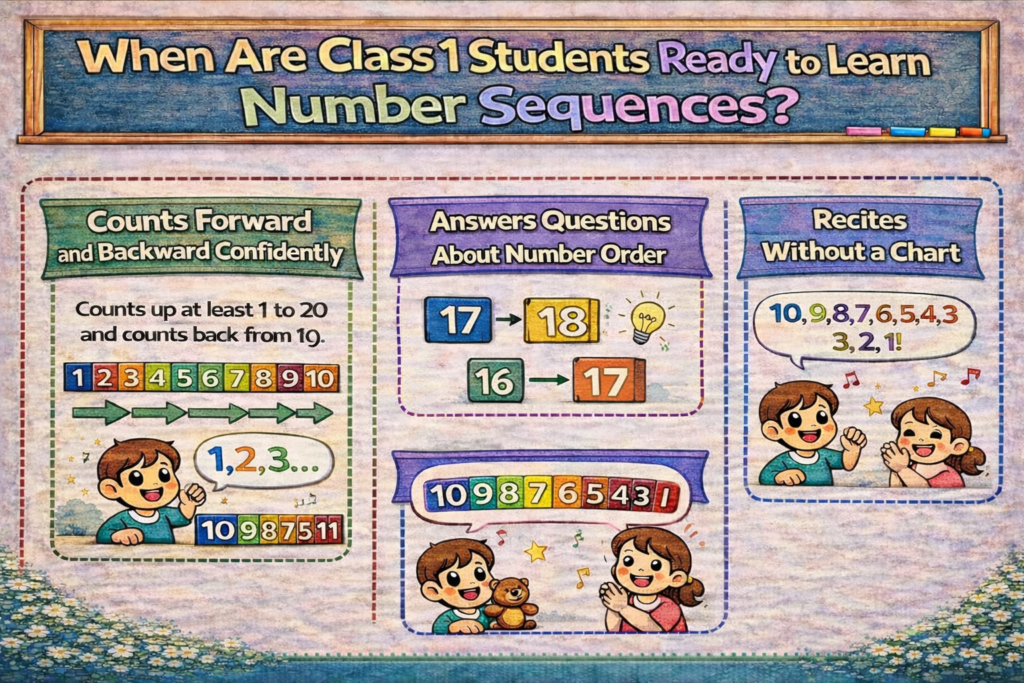
Most Class 1 students are ready to learn number sequences once they can recognize numbers from 1 to 20 and count forward confidently to at least 20.
These skills form the foundation for understanding that numbers follow a logical order.
Signs of readiness include:
- Reciting numbers in the correct order without help.
- Answering questions like “What comes after 17?” or “What comes before 10?”
- Counting backward from 10 during games or songs.
Some people think children need to count perfectly before learning number sequences, but that’s not true.
Many kids improve their counting skills through sequence activities like games, songs, and hands-on practice. Starting early builds confidence and understanding, even if their counting isn’t perfect yet.
Types of Number Sequences Taught in Class 1
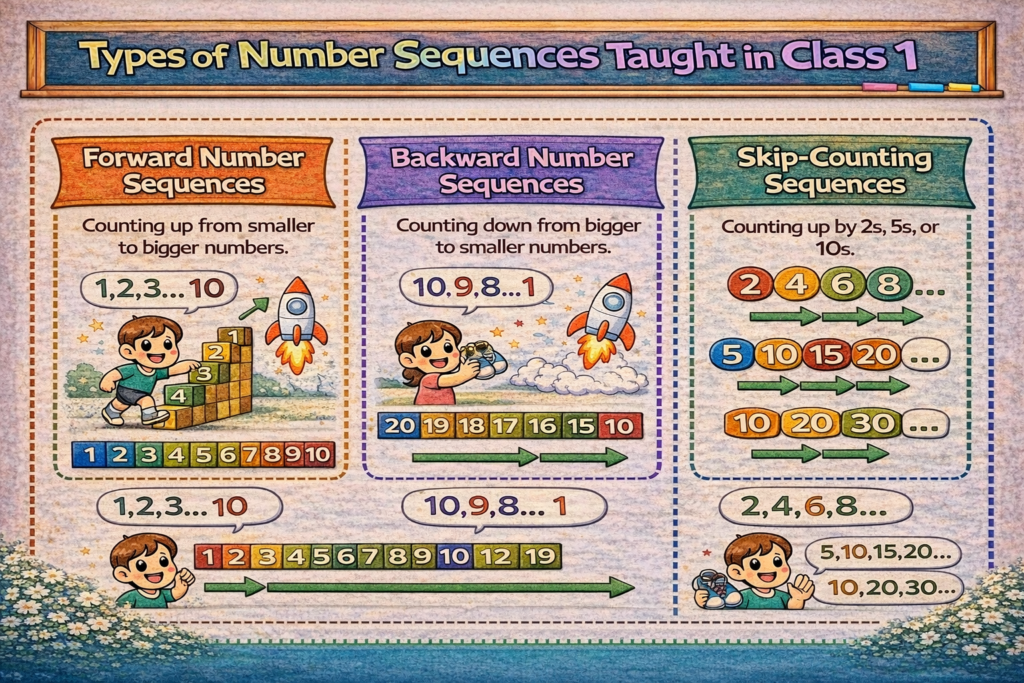
Class 1 students learn different types of number sequences to understand number order, patterns, and relationships. These include:
1. Forward Number Sequences
Forward counting is the most basic type of sequence. It involves counting from smaller to larger numbers, like 1 to 10 or 1 to 20.
This helps children understand the natural order of numbers, like climbing steps one by one.
Activities like number line games and oral counting routines make forward counting fun and engaging.
2. Backward Number Sequences
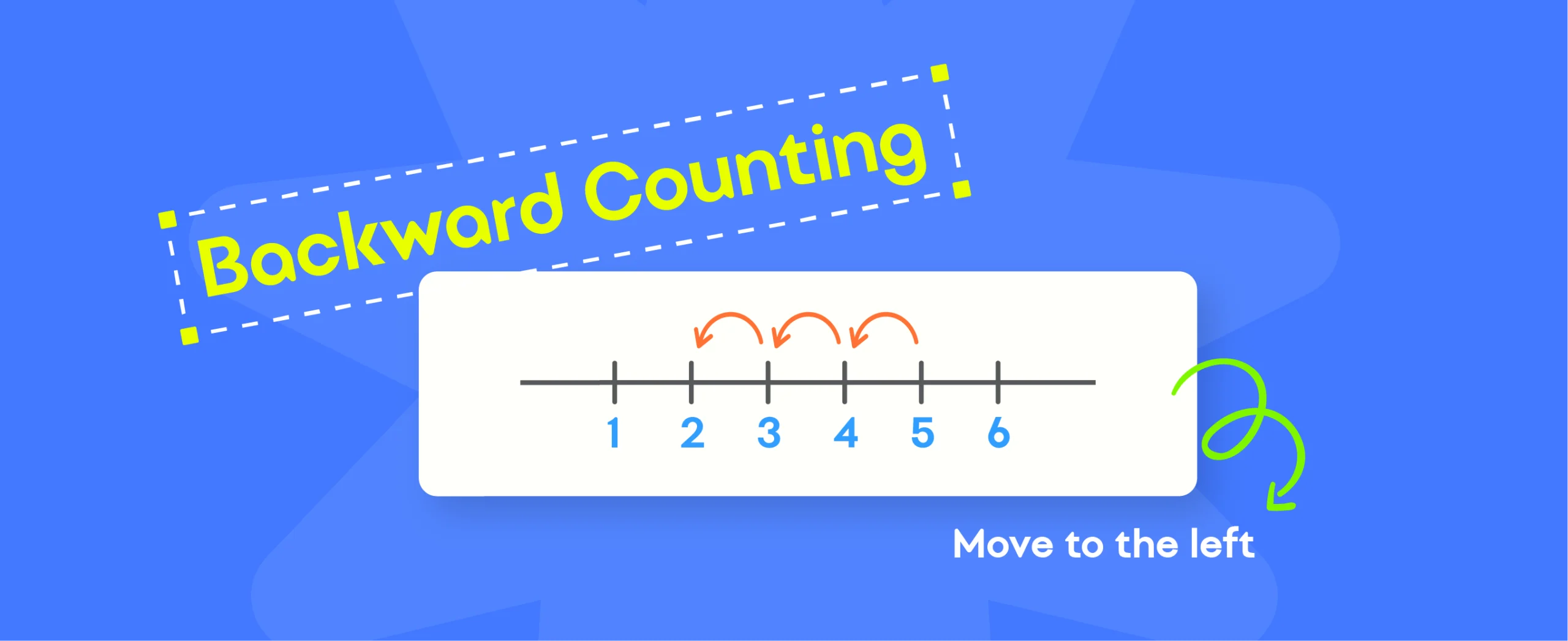
Backward counting teaches kids to count from larger to smaller numbers, such as 10 to 1 or 20 to 10.
This helps them think flexibly and understand subtraction. Backward counting is often used in real-life situations like countdowns in games or songs.
3. Skip-Counting Sequences
Skip counting introduces counting by fixed numbers, such as 2s, 5s, or 10s (e.g., 2, 4, 6, 8 or 5, 10, 15, 20).
Everyday examples, like counting pairs of shoes or groups of snacks, make skip counting easier to understand. It also prepares children for multiplication.
Step-by-Step Method to Teach Number Sequences
Teaching number sequences works best with a gradual, step-by-step approach:
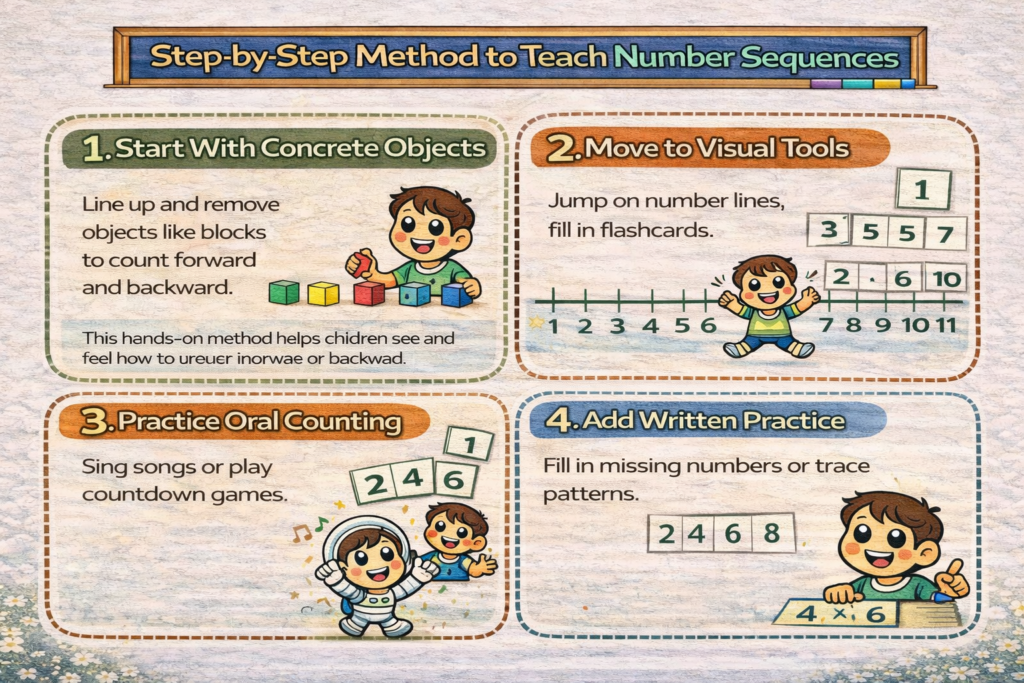
1. Start With Concrete Objects
Use real objects like toys, blocks, or beads. For example:
- Line up blocks to count forward.
- Remove one block at a time to count backward.
This hands-on method helps children see and feel how numbers increase or decrease.
2. Move to Visual Tools
Introduce tools like number lines, charts, and flashcards. Activities like jumping on a number line or filling in missing numbers make learning visual and interactive.
3. Practice Oral Counting
Use songs, chants, and games to make counting fun. For example:
- Count by 2s together.
- Play countdown games like “10, 9, 8… blast off!”
Oral practice builds fluency and confidence.
4. Add Written Practice
Introduce light written activities, such as:
- Filling in missing numbers (e.g., “2, 4, __, 8”).
- Tracing numbers or drawing patterns.
Keep written practice short and focus on understanding rather than perfection.
Fun Activities to Teach Number Sequences to Class 1 Students
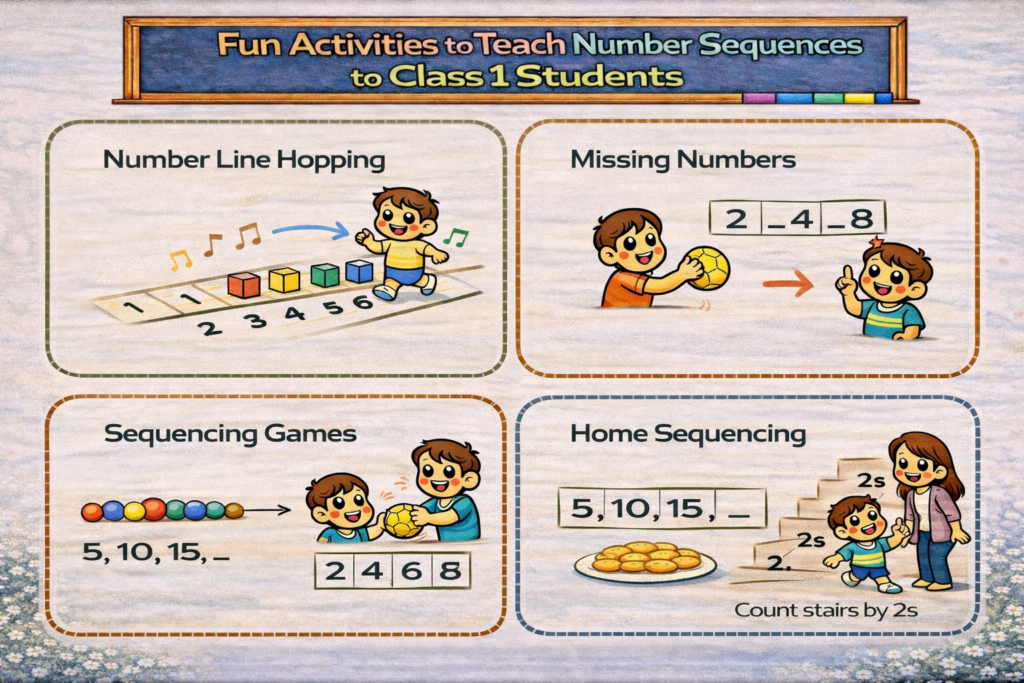
1. Number Line Hopping
Create a large number line on the floor. Ask kids to:
- Hop forward while saying each number.
- Hop backward or skip-count by 2s or 5s.
Adding music or clapping makes it even more engaging.
2. Missing Number Games
Write sequences with missing numbers (e.g., “2, 4, __, 8”) and ask kids to fill in the blanks.
Turn it into a game by passing a ball around the class—whoever has the ball fills in the missing number.
3. Classroom Sequencing Games
Use beads, blocks, or shapes to create patterns and extend sequences. Play relay games where students take turns adding the next number in a sequence.
4. Home Sequencing Games
Parents can use everyday routines to teach number sequences:
- Count stairs by 2s while going up or backward while coming down.
- Group snacks to practice skip counting.
These simple activities make learning part of daily life.
Daily routines offer great opportunities to teach number sequences. For example:
- Count steps while climbing stairs.
- Line up toys for forward counting.
- Group snacks for skip counting by 5s.
Calendars and routines also help. Kids can count days of the week, track dates, or count down minutes before bedtime.
These real-life examples make number sequences meaningful and easy to remember.
How to Help Children Who Struggle With Number Sequences
It’s normal for some children to struggle with number sequences. Here’s how to help:
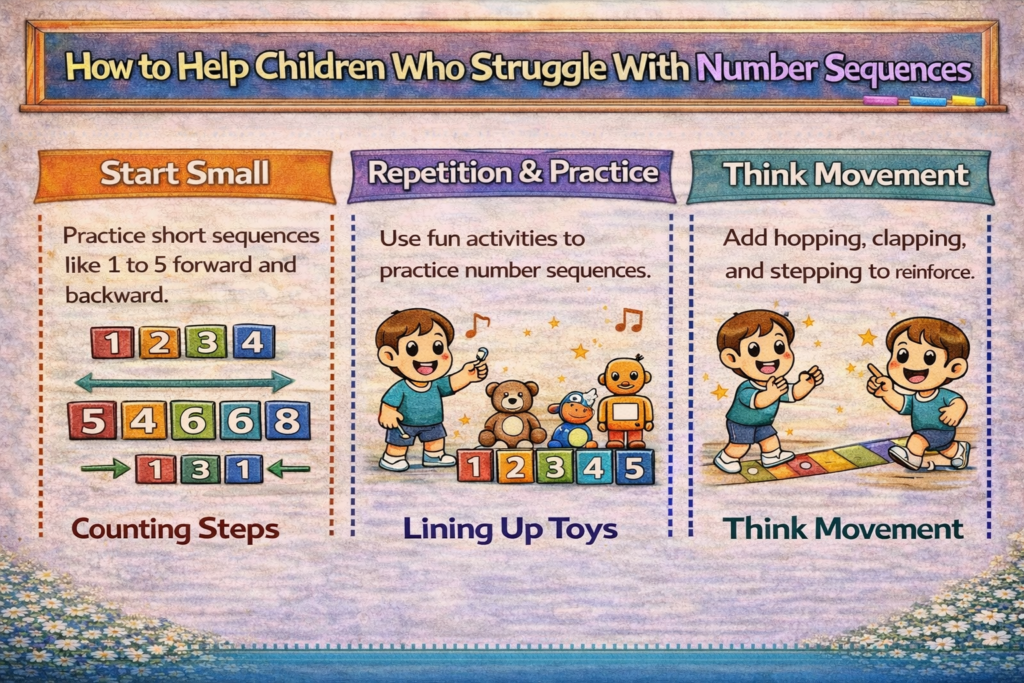
- Start small: Begin with simple sequences, like counting from 1 to 5 or backward from 5 to 1. Gradually increase the range.
- Use repetition: Short, fun activities like songs or games reinforce learning without pressure.
- Add movement: Activities like hopping on a number line or clapping while skip counting make learning active and engaging.
Patience and encouragement are key. With time, children can improve their number sense at their own pace.
How to Assess Number Sequence Understanding in Class 1
You don’t need formal tests to assess progress. Instead, try these simple methods:
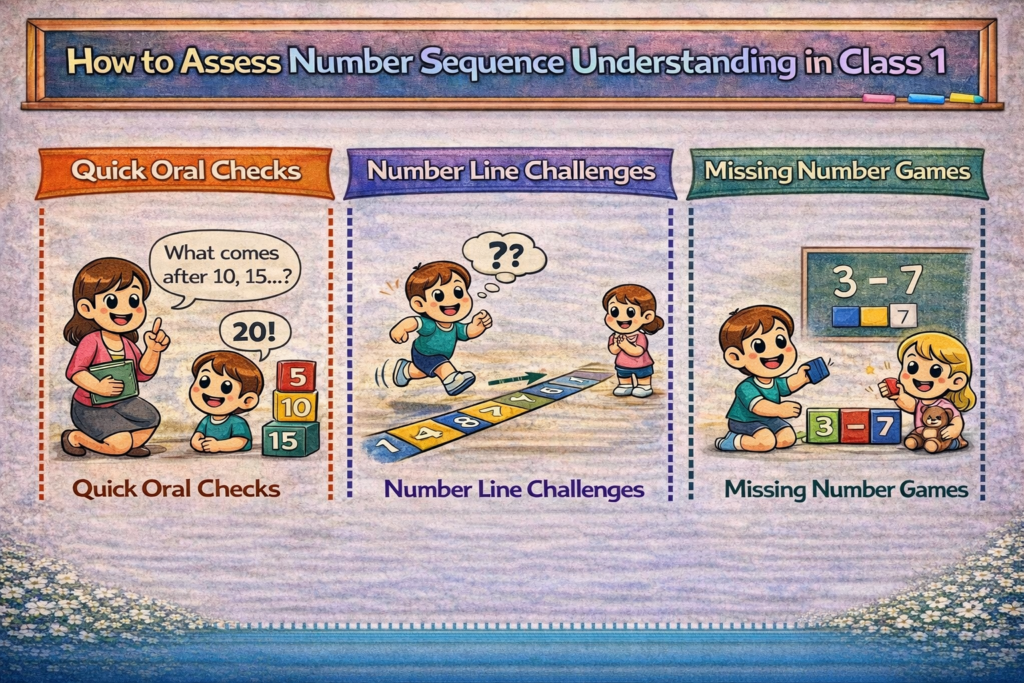
- Ask oral questions like, “What comes after 15?” or “Can you count backward from 12?”
- Observe hands-on activities, like hopping on a number line or filling in missing numbers.
Look for signs of understanding, such as predicting numbers, skip counting smoothly, or using number order in daily life.
Printable and Hands-On Materials for Number Sequences
The right materials can make learning fun and stress-free. Use:
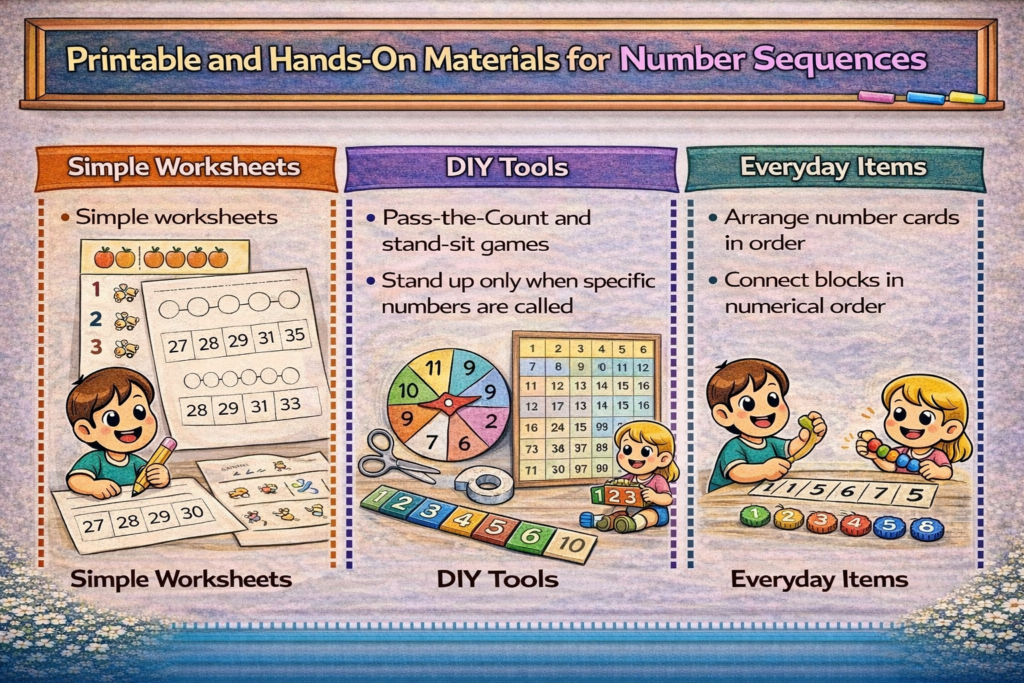
- Simple worksheets with activities like filling in missing numbers or tracing patterns.
- DIY tools like paper number lines, number wheels, or charts.
- Everyday items like beads or bottle caps to create sequences.
Pair worksheets with hands-on and movement-based activities for the best results. Praise children for their effort and focus on progress, not just correct answers.
Make Preparing for Math Olympiad Simple!



Conclusion
Teaching number sequences in Class 1 is most effective when it’s simple, fun, and gradual.
Fun activities and real-life examples make learning meaningful and engaging. Patience and play-based learning are important. This is especially true for children who learn at different speeds.
Parents and teachers can help every child grow their number sense and confidence in math. They can do this with steady support and encouragement.