September 19, 2025
 10 min. read

The average AMC 8 score is typically around 10–13 out of 25.
The average AMC 10 score is typically 55–65 out of 150, and the average AMC 12 score is usually around 55–65 out of 150, depending on the year and exam difficulty.
But knowing the average is only half the picture because average and competitive are two very different things.
This guide explains what the average AMC math score means, how it compares to average and competitive scores, the 2026 AIME qualification cutoffs, and the next steps to take based on your performance.
Others want to know how scores translate into AMC math competition awards or how to prepare for the AMC math competition more effectively next time.
How AMC Scoring Works
Before comparing scores, you need to understand how AMC scoring works.
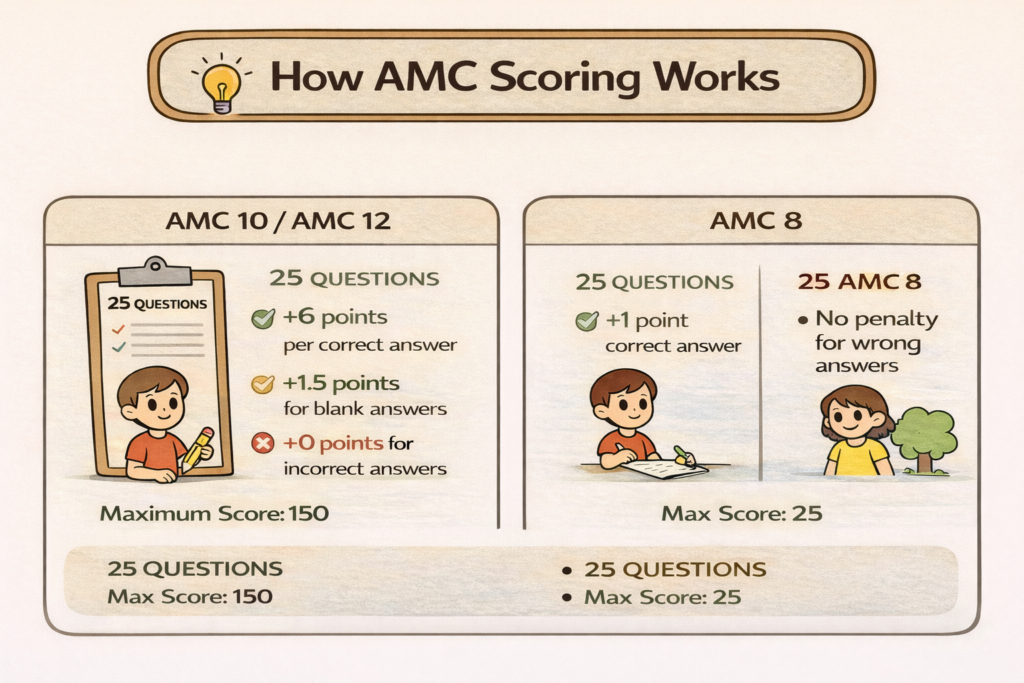
AMC 10 and AMC 12 scoring system:
- 25 questions
- 6 points per correct answer
- 1.5 points for blank answers
- 0 points for incorrect answers
- Maximum score: 150
AMC 8 scoring system:
- 25 questions
- 1 point per correct answer
- No penalty for wrong answers
- Maximum score: 25
Because the questions are difficult, average scores often appear “low” compared to school tests. Understanding the AMC scoring system is key before evaluating your performance.
You can check the AMC age limit and eligibility rules if you’re unsure which exam to take.
What Is the Average AMC Math Score?
The average AMC math score varies slightly each year, but typical ranges are:
- AMC 8 average score: 12–13 out of 25
- AMC 10 average score: 55–65 out of 150
- AMC 12 average score: 55–65 out of 150
These numbers reflect the difficulty of the competition.
But average does not mean competitive.
Average Scores of the AMC
Understanding the average scores on AMC contests helps students and parents see where most participants land and what it takes to stand out.
You can review the official AMC syllabus to see which topics influence scores most.
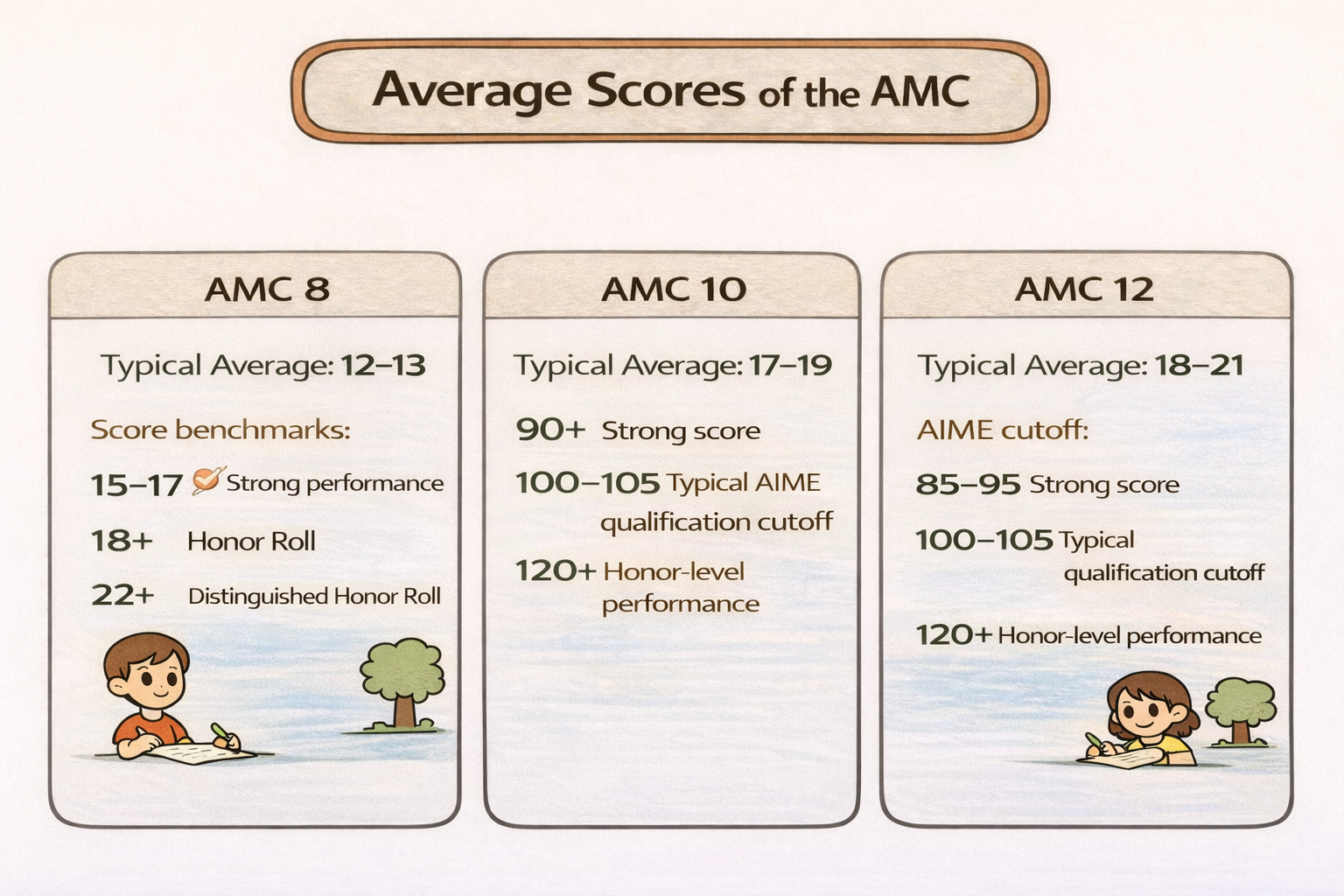
Here’s how the numbers typically break down across all three exams:
| Exam | Max Score | Typical Average | Honor Roll | AIME Cutoff |
|---|---|---|---|---|
| AMC 8 | 25 | 12–13 | 18+ | N/A |
| AMC 10 | 150 | 55–65 | 120+ | 100–105 |
| AMC 12 | 150 | 55–65 | 110+ | 85–95 |
AMC 8 Average Score
The AMC 8 average score is typically around 12–13 out of 25.
Whether you’re a 5th grader, 6th grader, 7th grader, or 8th grader, the difficulty is the same — but the context of a “good score” shifts by grade level.
AMC 8 score benchmarks:
- 15–17 → Strong performance
- 18+ → Honor Roll
- 22+ → Distinguished Honor Roll (DHR)
A score of 15 already places a student well above the national average. For a 7th grader, hitting 17+ is excellent. For a 5th grader, scoring 14 or higher is outstanding.
AMC 8 Score Distribution and Percentiles
The AMC 8 score distribution is wide because participation includes a large mix of beginners and advanced students. Here’s a rough guide:
| Score Range | Performance Level | Approximate Percentile |
|---|---|---|
| 1–11 | Below average | Bottom 50% |
| 12–14 | Around average | 50th–65th percentile |
| 15–17 | Above average / strong | 65th–85th percentile |
| 18–21 | Honor Roll | Top 15% |
| 22–25 | Distinguished Honor Roll | Top 1–5% |
The top 5% of AMC 8 scorers typically land at 19 or higher in recent years, though the exact cutoff shifts with each year’s score distribution.
AMC 10 Average Score
The AMC 10 average score is usually between 55–65 out of 150.
Because scoring includes blank bonuses, raw comparison can be misleading.
AMC 10 competitive benchmarks:
- 90+ → Strong score
- 100–105 → Typical AIME qualification cutoff
- 120+ → Honor-level performance
2026 AMC 10 AIME Cutoff
The 2026 AMC 10A and AMC 10B AIME cutoff scores typically fall in the 100–106 range, though the exact cutoff varies by year and form. The AMC 10A cutoff has historically hovered around 94.5–105, while the 10B follows a similar pattern.
For the most accurate 2026 AIME cutoffs, check the MAA’s official results after the competition.
AMC 10 Score Range and Percentiles
- Top 10%: roughly 90+
- Top 5% (AIME qualification zone): roughly 100–106
- Top 1%: roughly 120+
For a 7th grader taking the AMC 10, scoring 75–90 is impressive given the grade-level challenge.
AMC 12 Average Score
The AMC 12 average score typically falls between 55–65 out of 150.
AMC 12 AIME qualification cutoffs usually range from 85–95 (varies by year and form).
A score above 100 on the AMC 12 is considered highly competitive.
2026 AMC 12 AIME Cutoff
The AMC 12A and 12B AIME cutoff scores for 2026 are expected to fall around 85–93, consistent with recent years. Historically, AMC 12A cutoffs have ranged from 76.5 to 96, shifting based on the difficulty of each exam.
AMC 8 vs AMC 10 vs AMC 12: Key Differences
Students often ask how the three exams compare. Here’s a quick breakdown:
- AMC 8: For students in grade 8 or below (under 14.5 years old). 25 questions, 40 minutes, scored out of 25. No penalty for wrong answers. No AIME advancement.
- AMC 10: For students in grade 10 or below (under 17.5 years old). 25 questions, 75 minutes, scored out of 150. Top scorers advance to the AIME.
- AMC 12: For students in grade 12 or below (under 19.5 years old). 25 questions, 75 minutes, scored out of 150. Broader topics, lower AIME cutoff score.
The AMC 8 is the entry point it builds problem-solving skills without the pressure of AIME progression. The AMC 10 and 12 are more competitive, with a narrower field of highly motivated participants.
For a complete guide to AMC registration and how to sign up, check our dedicated resource.
Average vs Competitive Score
Here’s the key difference.
Average means typical. Competitive means top percentile.
| Exam | Average Score | Good Score | Honor Roll | AIME Cutoff |
|---|---|---|---|---|
| AMC 8 | 12–13 | 15–17 | 18+ | N/A |
| AMC 10 | 55–65 | 90+ | 120+ | 100–105 |
| AMC 12 | 55–65 | 85+ | 110+ | 85–95 |
What Affects AMC Average Scores?
Ever wonder why the average score on the AMC changes from year to year?
It’s not random; several things come into play:
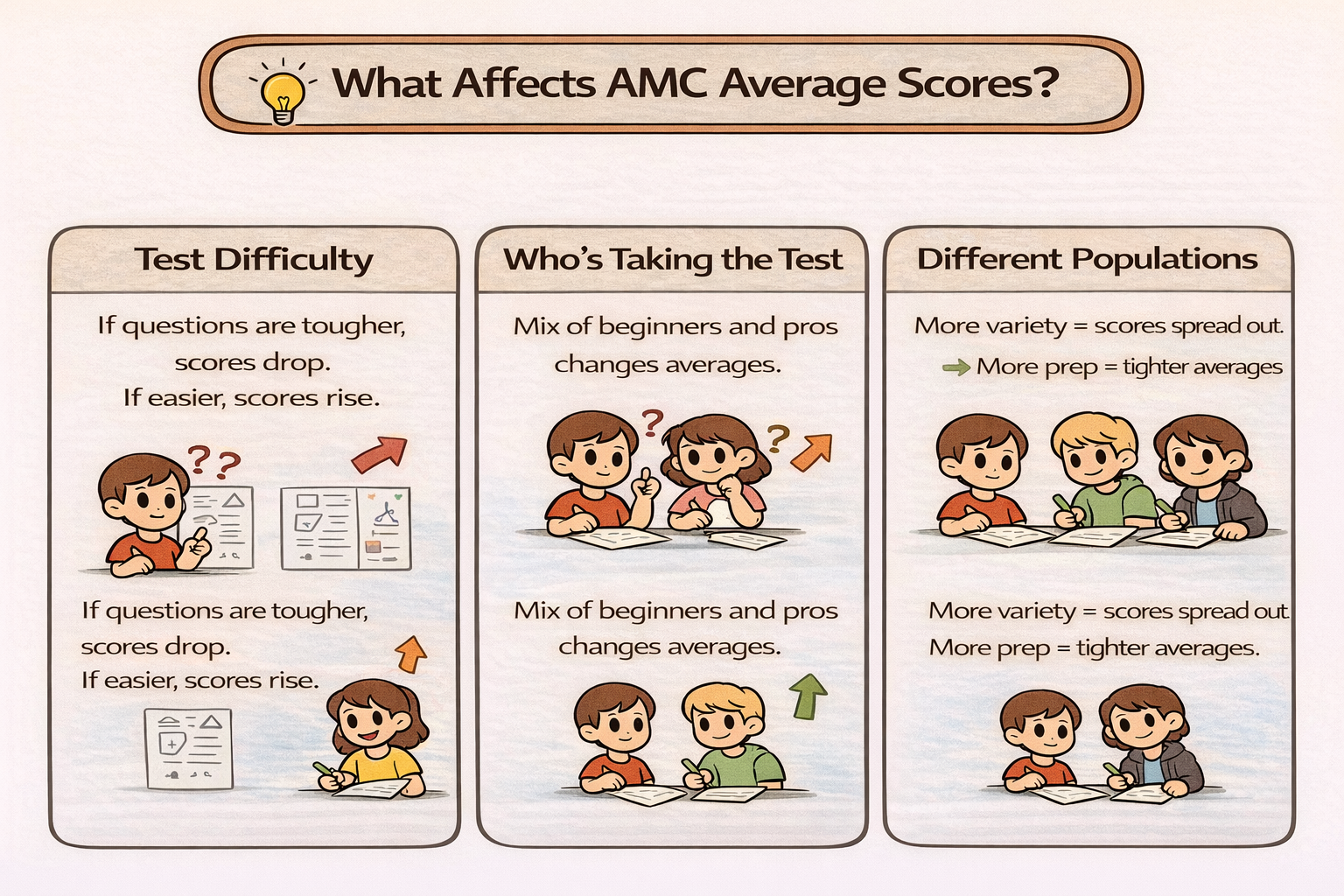
Test Difficulty
Each AMC contest has a brand-new set of problems. Some years, the test feels tougher, so averages drop. Other years, it’s a bit friendlier, and averages go up.
That’s why it’s important to look at averages in the context of that year’s exam.
Who’s Taking the Test
On the AMC 8, tons of middle schoolers sign up, including many just trying it for the first time. This mix of beginners and advanced students brings the overall average down.
On the AMC 10 and 12, the group is smaller but usually packed with well-prepared high schoolers aiming for the AIME.
Even though the problems are harder, the averages often look steadier because the students are more experienced.
Different Populations = Different Results
- AMC 8: Big variety in skill levels → more score spread and lower averages.
- AMC 10/12: More motivated, contest-prep students → tighter, more competitive averages.
That’s why comparing scores across years or between the AMC 8, 10, and 12 only makes sense when you also consider these factors, not just the raw numbers.
To understand why AMC performance matters beyond scores, you can read about the benefits of the AMC math competition.
Average Score vs. “Good” Score on AMC
When it comes to the AMC math competitions, the average score tells you how most students perform across the country — it’s the baseline for that year.
But if you’re asking “what’s a good score?”, the answer goes a little further. For a deeper breakdown, see our complete guide on what is a good AMC math score.
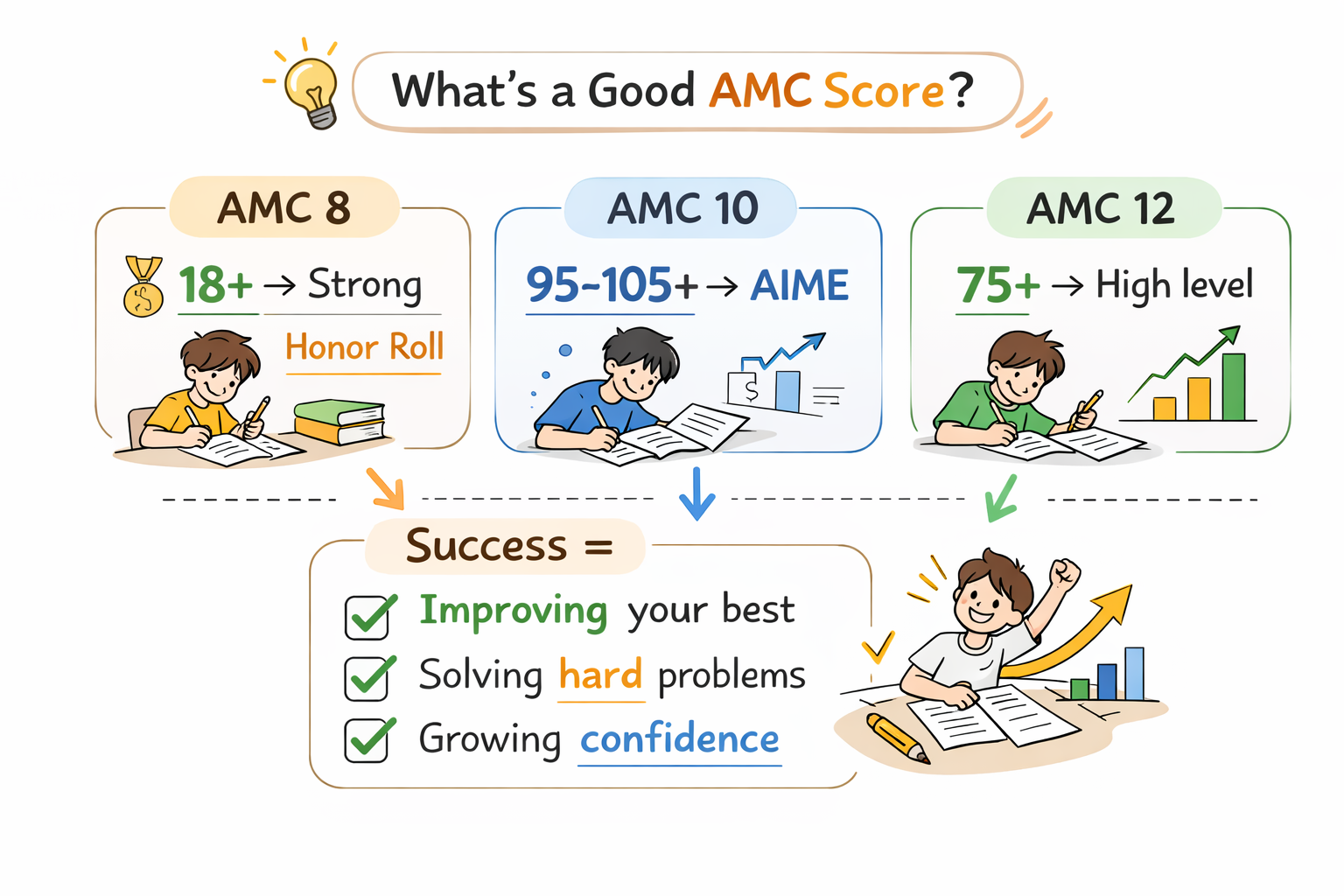
- AMC 8 → About 18+ is considered strong and often lands you on the Honor Roll.
- AMC 10 → Scoring 95–105+ usually means AIME qualification.
- AMC 12 → Hitting 75+ points is a sign you’re competing at a high level.
But here’s the key: AMC success isn’t just about chasing numbers. A good score can also mean:
✔️ Doing better than you did last time
✔️ Solving a problem you once found impossible
✔️ Growing more confident in your math skills
With consistent practice and the right strategies, students naturally move from “average” territory to national recognition one step at a time.
Want to know how the AMC compares globally? See our breakdown of the best math competitions in the world.
AMC Score Percentiles Explained
Percentiles matter more than averages.
- Top 10% = Strong performance
- Top 5% = Highly competitive (AIME qualification zone for AMC 10)
- Top 2.5% = AIME qualification zone (AMC 10, historically)
- Top 1% = National distinction
AIME qualification represents roughly the top 2.5% of AMC 10 participants and the top 5% of AMC 12 participants.
AMC 8 Percentiles
For the AMC 8, the top 5% typically corresponds to a score of 19 or above, and the top 1% falls at 22–23+. Score distribution data published after each contest shows exactly where the cutoffs land in a given year.
AMC 10 and AMC 12 Percentiles
On the AMC 10, scoring 100+ puts you in approximately the top 5% the AIME qualification zone. On the AMC 12, the AIME threshold sits at a similar top-5% level, but the raw score requirement is lower (typically 85–95) due to harder problems.
Is My AMC Score Good?
Use this framework:
- Below average → Build fundamentals
- Around average → Improve speed and accuracy
- Above average → Refine strategy
- Near AIME cutoff → Intensive practice
What Is a Good AMC Score by Grade?
Here’s how to think about “good” scores by grade level:
| Grade | AMC 8 Good Score | AMC 10 Good Score |
|---|---|---|
| 5th grade | 13–15 | N/A (usually too early) |
| 6th grade | 14–16 | N/A (usually too early) |
| 7th grade | 16–18 | 60–80 |
| 8th grade | 18–22 | 75–95 |
| 9th grade | N/A | 90–106+ |
| 10th grade | N/A | 100–120+ |
These are general guides performance varies widely. What matters most is your trajectory over time.
What to Do Next Based on Your Score
If you scored:
- Below average → Focus on concept gaps. Start with structured math olympiad practice questions to build your foundation.
- Around average → Practice timed mock exams. Read our guide on how to prepare for the AMC for a structured plan.
- Above average → Train with advanced olympiad problems. Check out how to get better at solving math olympiad questions.
- Near AIME cutoff → Strategy refinement + weak-topic drills. If you’re aiming for IMO, start with how to qualify for the IMO in the USA.
Consistent, structured practice makes the difference.
That’s where Gonit App helps.
Gonit provides:
- Structured AMC-level practice
- Concept-based progression
- Timed mock exams
- Performance analytics
You can also explore free math olympiad training online to supplement your preparation at no cost.
Do Colleges Care About AMC Scores?
Strong AMC performance, especially an AIME qualification, demonstrates advanced mathematical ability to colleges.
Ivy League and top STEM schools value high AMC and AIME scores as indicators of genuine mathematical talent beyond classroom grades.
Even if you haven’t qualified for the AIME yet, improving your AMC score year over year shows intellectual growth and discipline qualities any college admissions team appreciates.
For students thinking beyond AMC, read our guide on how to improve problem-solving skills for the IMO to build the mindset top scorers develop.
What is the average AMC 8 score?
Around 12–13 out of 25.
What is a good AMC 10 score?
Generally, 90+ is strong. 100+ often qualifies for AIME.
What is the AIME qualification cutoff?
Usually around 100–105 for AMC 10 and 85–95 for AMC 12.
Do colleges care about AMC scores?
Strong AMC performance demonstrates advanced mathematical ability.
Is average a good score?
Average means typical. Competitive scores are significantly higher.
What is a good AMC 8 score for a 6th grader?
14–16 is considered a strong score for a 6th grader. An 18+ score at this grade level is exceptional.
What is a good AMC 8 score for a 5th grader?
Scoring 13–15 as a 5th grader is very strong. Any score above 15 puts a 5th grader well ahead of their grade-level peers.
What is the AMC 8 score distribution for 2026?
The 2026 AMC 8 score distribution follows the typical pattern: average around 12–13, Honor Roll at 18+, and Distinguished Honor Roll at 22+. Official data is released by the MAA after results are published.
What is a good AMC 10 score for a 7th grader?
Scoring 70+ on the AMC 10 as a 7th grader is impressive. Anything above 90 is exceptional at that grade level.
What is a good AMC 8 score for a 7th grader?
A score of 16–18 is considered strong for a 7th grader. Hitting 18+ puts you at the Honor Roll level.
Make Preparing for Math Olympiad Simple!



Conclusion
AMC averages show where most students land, but your real success comes from growth and problem-solving skills.
Whether you’re asking about the average AMC 8 score by grade, the 2026 AIME cutoff, or what separates average from competitive, the answer is the same: consistent, deliberate practice.
Keep practicing, aim higher each time, and enjoy the challenge. Scores will follow naturally.
Want to understand the full competitive landscape? Explore the benefits of taking the AMC math competition and see why hundreds of thousands of students sit for this exam each year.