December 23, 2025
 5 min. read

Teaching ascending and descending order works best when children can see, touch, and move while learning.
Young children do not need long explanations or strict drills. They learn naturally through visuals, movement, repetition, and encouragement.
If your child is completely new to this topic, it helps to first understand what ascending and descending order in maths really mean before focusing on teaching methods.
This guide explains how to teach ascending and descending order to kids step by step, using simple methods that match how Class 1 children actually think, explore, and learn.
Understanding a Child’s Learning Level
Instead of starting with abstract numbers, begin with real-life objects, number cards, or everyday items.
This helps children understand what “small to big” and “big to small” really mean and builds early number sense, which is essential for ordering numbers confidently.
Why Class 1 Kids Need Visual Learning
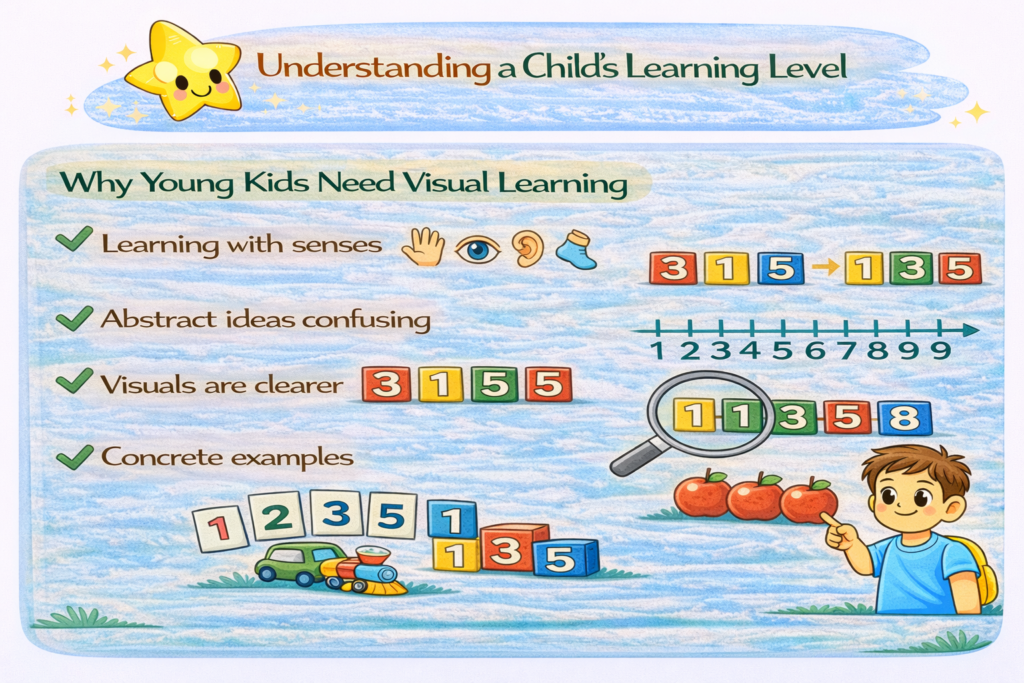
Children in Class 1 are still learning through their senses. They understand best when they can see, touch, hear, and move.
Abstract explanations such as:
“Arrange the numbers logically”
do not mean much to them yet.
Instead, children learn faster when:
- numbers are written on cards
- numbers are shown on number lines
- numbers are connected to real objects
For example, a child understands “3 apples” more easily than the number “3” alone.
Visual learning helps children:
- reduce confusion
- stay focused
- remember concepts longer
Importance of Concrete Examples
Children feel safe when learning is familiar. When maths is connected to daily life, it feels less like a subject and more like a game.
Concrete examples:
- reduce fear of mistakes
- build confidence
- help children explain their thinking
That is why teaching number order using toys, fruits, steps, or classroom objects works so well.
Step 1: Teach Counting First (The Most Important Step)
Before teaching ascending and descending order, children must feel comfortable with counting.
If counting is weak, number ordering will feel difficult.
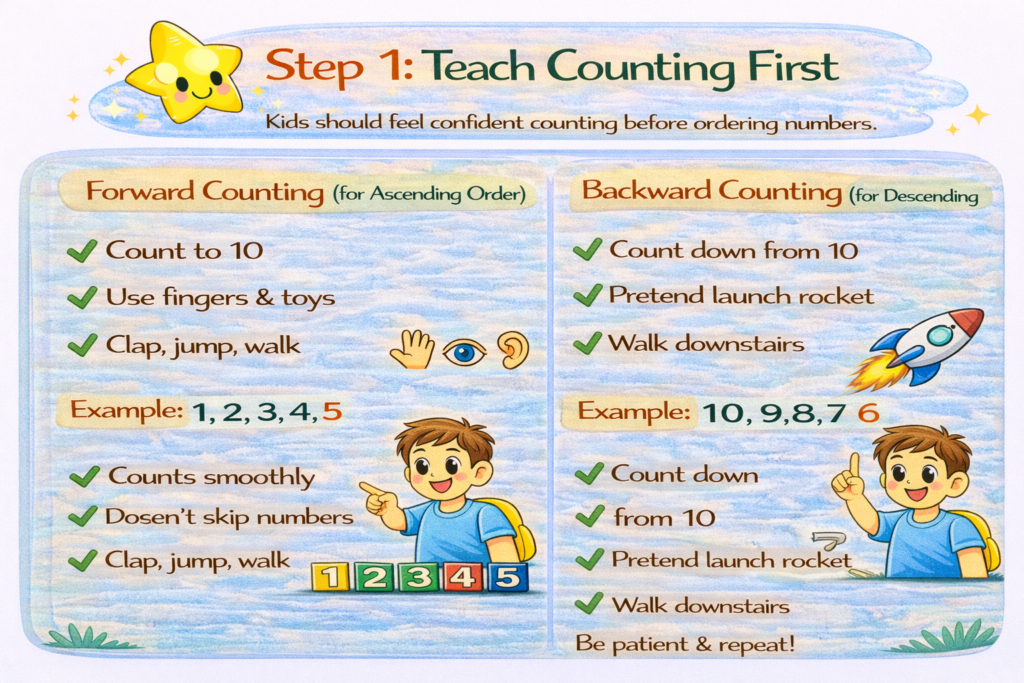
Forward Counting (Preparing for Ascending Order)
Forward counting helps children understand that numbers increase step by step.
Practice ideas:
- Count aloud together from 1 to 10
- Use fingers, blocks, or toys
- Clap, jump, or walk while counting
Example:
1, 2, 3, 4, 5…
Signs a child is ready:
- They can count smoothly
- They don’t skip numbers
- They recognise numbers when spoken
Backward Counting (Preparing for Descending Order)
Backward counting helps children understand that numbers decrease step by step.
Practice ideas:
- Count down from 10 to 1
- Pretend to launch a rocket
- Walk downstairs while counting
Example:
10, 9, 8, 7…
Backward counting may feel harder at first, so be patient and repeat often.
Step 2: Introduce Ascending Order (Small to Big)
Explain in the Simplest Way
Use very clear and repeated language:
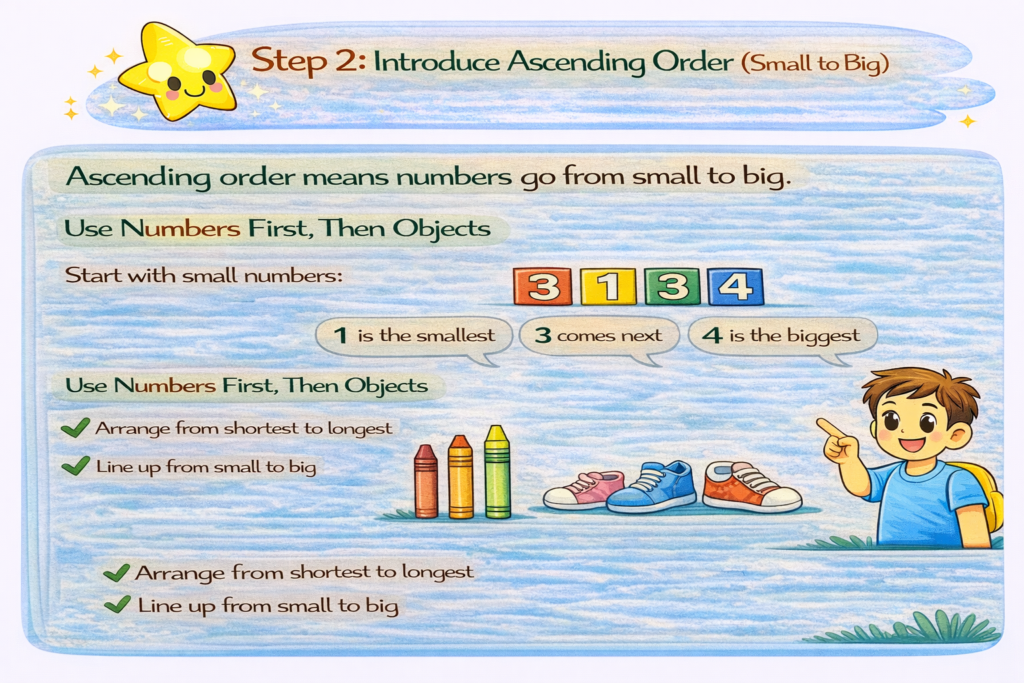
“Ascending order means numbers go from small to big.”
Avoid extra terms at first. Simple words work best.
Use Numbers First, Then Objects
Start with small numbers:
3, 1, 4 → 1, 3, 4
Saying numbers aloud and practising with clear examples of ascending and descending order for Class 1 helps children gain confidence quickly.
Say it aloud:
- “1 is the smallest”
- “3 comes next”
- “4 is the biggest”
Then repeat the idea using objects:
- Arrange crayons from shortest to longest
- Line up shoes from small to big
This repetition strengthens understanding.
Step 3: Teach Descending Order (Big to Small)
Explain Clearly and Calmly
Once ascending order is understood, introduce descending order.
Say:
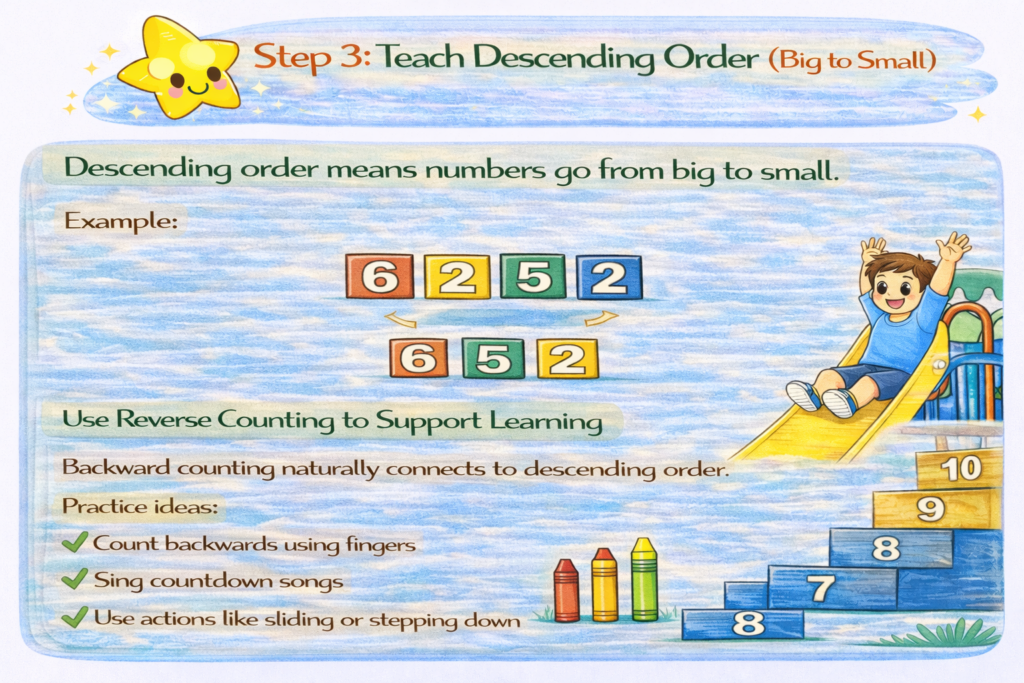
“Descending order means numbers go from big to small.”
Example:
6, 2, 5 → 6, 5, 2
Use Reverse Counting to Support Learning
Backward counting naturally connects to descending order.
Practice ideas:
- Count backwards using fingers
- Sing countdown songs
- Use actions like sliding or stepping down
Children begin to feel the direction of numbers instead of memorising rules.
Step 4: Use Visual Tools to Strengthen Understanding
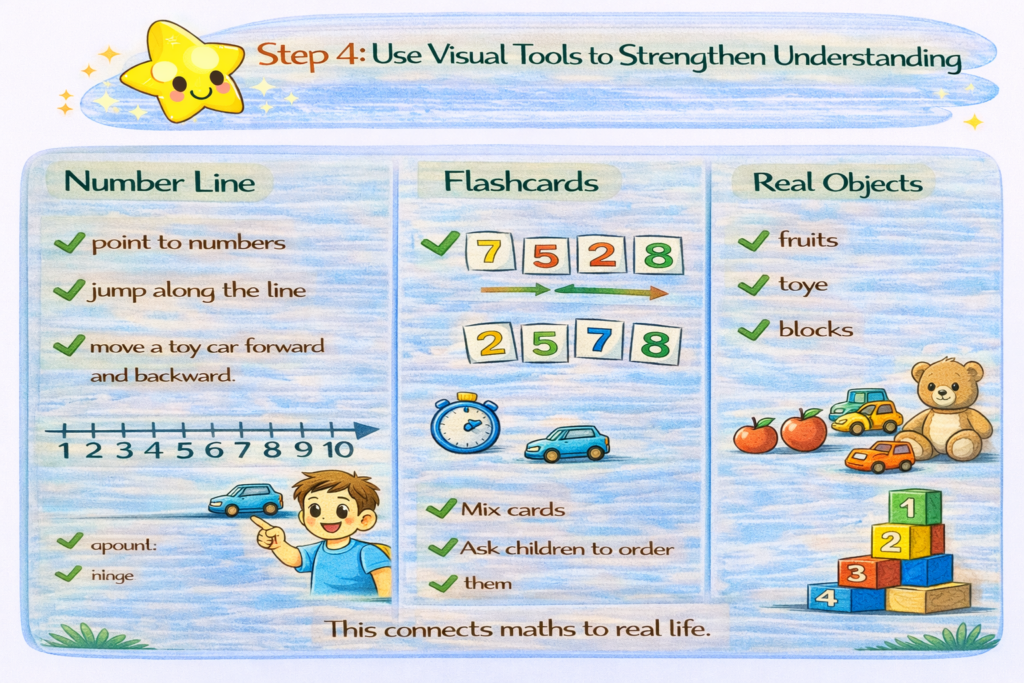
Number Line (Very Powerful Tool)
A number line helps children see number order clearly.
Explain:
- Numbers increase as we move right
- Numbers decrease as we move left
Let children:
- point to numbers
- jump along the line
- move a toy car forward and backward
If your child struggles with this concept, learning how number lines work in Class 1 maths can make ordering numbers much easier.
You can also guide them by showing how to draw a simple number line at home using paper or chalk.
Flashcards
Flashcards make learning quick and flexible.
Activities:
- Mix cards and ask children to order them
- Time the activity for fun
- Use colours to show direction
Real Objects (Best for Early Learners)
Everyday objects work best:
- fruits
- toys
- blocks
Ask children to count and arrange them.
This connects maths to real life.
Step 5: Fun Classroom and Home Activities
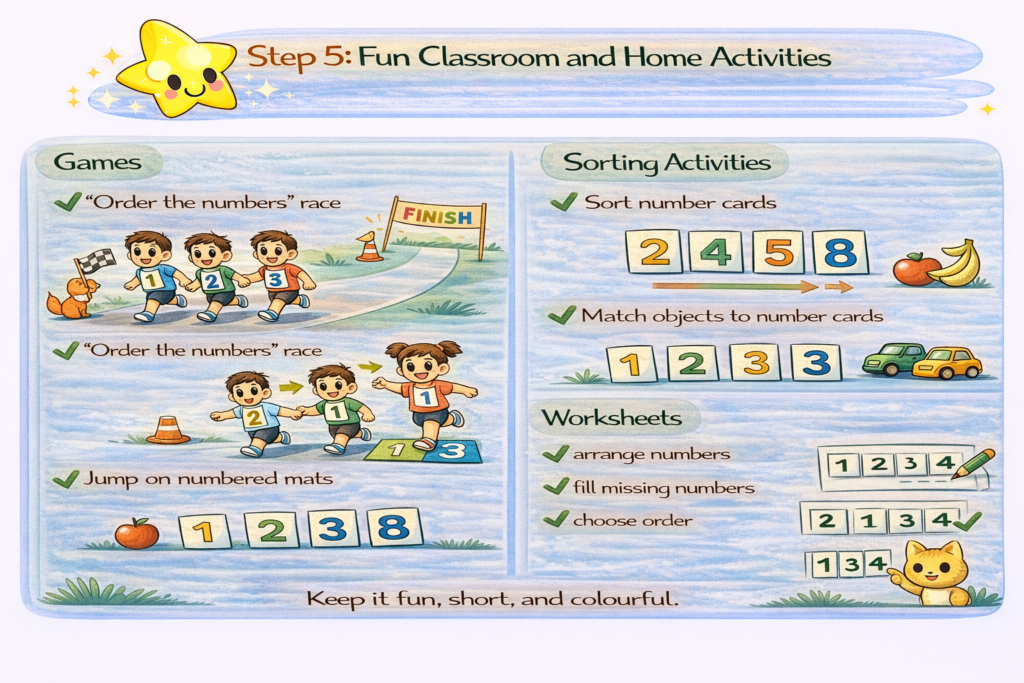
Games That Teach Without Pressure
Games make learning feel natural.
Examples:
- “Order the numbers” race
- Children standing as numbers and rearranging themselves
- Jumping on numbered mats
Sorting Activities
Sorting improves comparison skills.
Examples:
- Sort number cards from smallest to biggest
- Match objects to number cards
Worksheets (After Hands-On Learning)
Worksheets should support learning, not replace play.
Good worksheet tasks:
- arrange numbers
- fill missing numbers
- choose the correct order
Keep them short and colourful.
Tips for Parents and Teachers
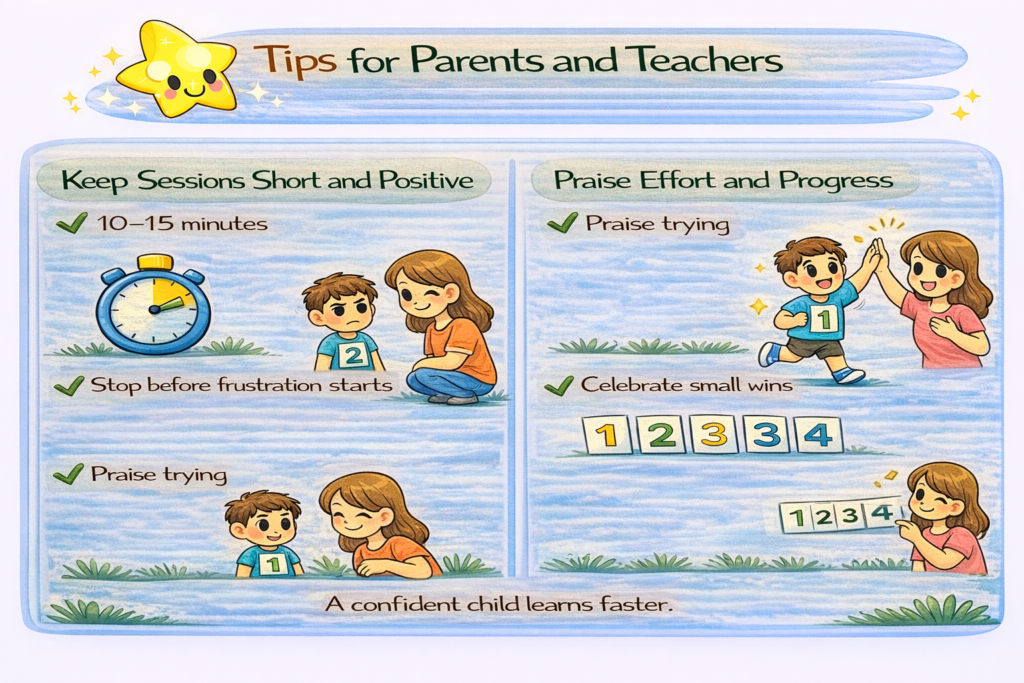
Keep Sessions Short and Positive
Children learn best in short bursts.
- 10–15 minutes is enough
- Stop before frustration starts
Praise Effort and Progress
Encouragement matters more than perfection.
- Praise trying
- Celebrate small wins
- Stay calm with mistakes
A confident child learns faster.
Make Preparing for Math Olympiad Simple!



Final Thoughts
Ascending and descending order are not just maths topics, they are thinking skills.
When children learn number order through play, visuals, and real-life examples, they:
- understand numbers better
- feel confident in maths
- build a strong foundation for future learning
With patience and playful practice, every child can master number ordering.