November 28, 2025
 5 min. read

Number sense resources for parents are essential for helping young children build strong early math skills at home.
In early math learning, you play a bigger role than you might realize.
When parents actively support their child’s number development, kids gain confidence, understand quantities more deeply, and develop a positive attitude toward numbers.
This guide explores the top resources that parents can rely on to strengthen their children’s number sense.
Home-Based Resources
Supporting early math learning at home doesn’t require fancy materials; you already have everything you need right around the house.

With simple, everyday items and easy DIY tools, you can help your child build strong number sense in fun, meaningful ways.
- Household Objects
Your home is full of learning opportunities. Using everyday items helps your child connect numbers to real life and understand quantities naturally.
Counting Toys, Fruits, Utensils
Invite your child to count toys, apples, spoons, or steps.
For example:
- “Can you bring me 5 spoons?”
- “Let’s count 10 blocks together.”
This builds one-to-one correspondence and strengthens number recognition. Activities like these also support spatial understanding for Class 1, which develops in tandem with number sense.
Sorting and Grouping Activities
Sorting activities are powerful for developing number sense.
Your child can sort items by:
- size,
- color,
- type,
- or quantity.
For example, sorting buttons into groups of 5 or arranging crayons from shortest to longest. This encourages pattern recognition and logical thinking.
This encourages pattern recognition and logical thinking—skills closely connected to activities like geometrical shapes for Grade 1.
- DIY Learning Tools
You can create simple, effective math tools at home that make learning engaging and hands-on.
Homemade Flashcards
Create colorful flashcards with numbers, dots, or simple addition problems.
These help with number recognition, subitizing, and quick recall.
Number Charts
A DIY number chart from 1–100 (or a 120 chart) displayed on a wall helps your child:
- recognize number patterns,
- practice skip counting,
- and understand number order.
You can even turn it into a fun daily routine—“Find today’s number!”
Ten-Frames
Make ten-frames using paper, cardboard, or bottle caps. Your child can fill them with small objects like beads or beans.
Ten-frames help with:
- understanding quantities,
- making combinations to 10,
- and building mental math strategies.
skills that support future topics like multiplication for Class 1.
Print Resources
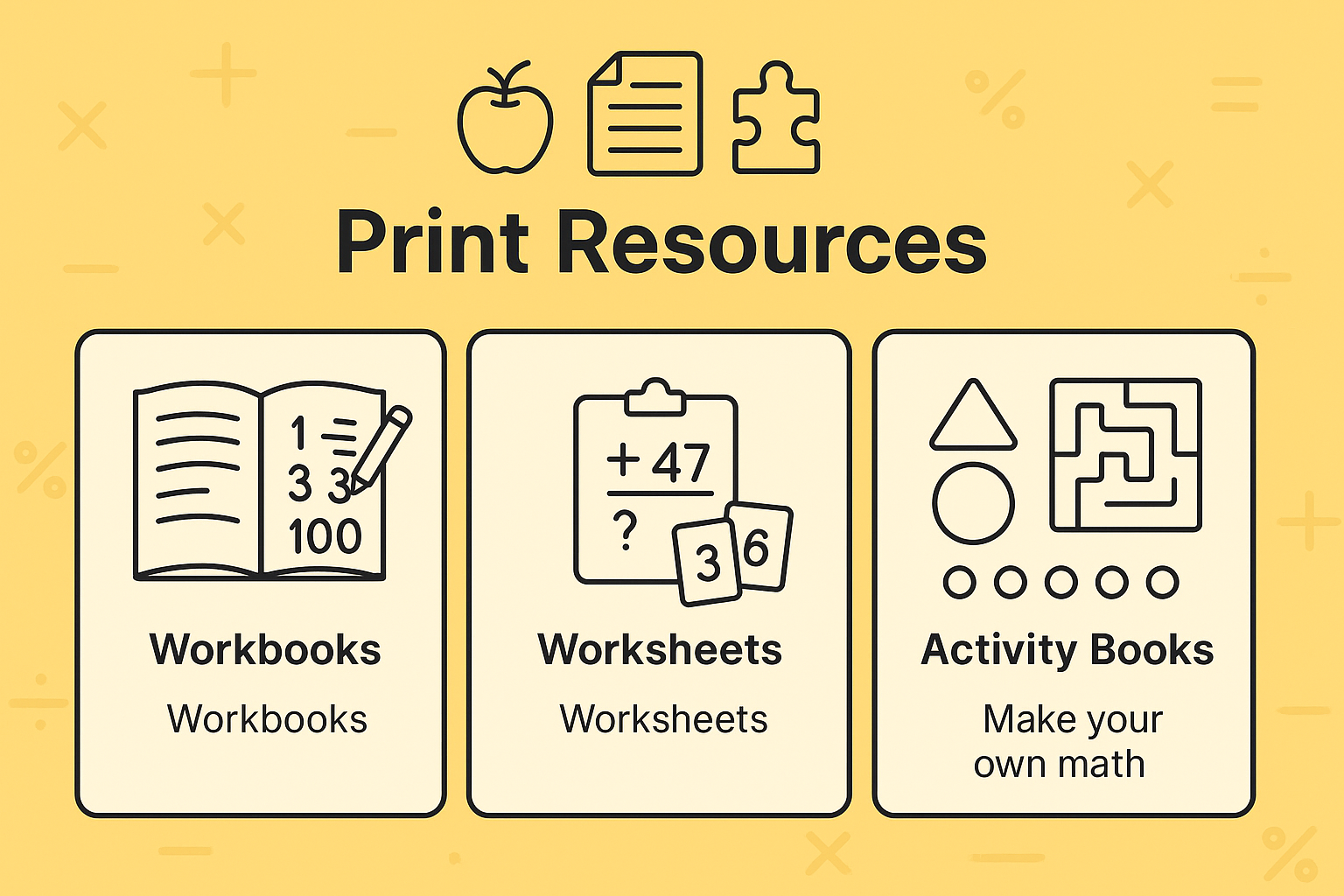
Print materials are simple, effective tools that you can use at home to support your child’s number sense development. These resources make learning structured, visual, and fun.
- Workbooks for Class 1
Class 1 math workbooks help your child practice counting, comparing numbers, patterns, and simple problem-solving in a guided way. You can use them for short, daily practice sessions.
This prepares them well for concepts taught in addition and subtraction for Class 1.
- Printable Worksheets
Printable worksheets give your child focused practice on skills like number recognition, skip counting, ordering numbers, and simple addition. They’re perfect for quick revision or weekend learning.
- Activity Books (Patterns, Puzzles, Counting)
Activity books filled with puzzles, number mazes, patterns, and coloring-by-number activities make learning enjoyable. These help your child develop logical thinking, attention to detail, and early math confidence.
These help your child develop logical thinking and early math confidence, similar to the reasoning skills practiced in math analogies for kids.
Digital Resources
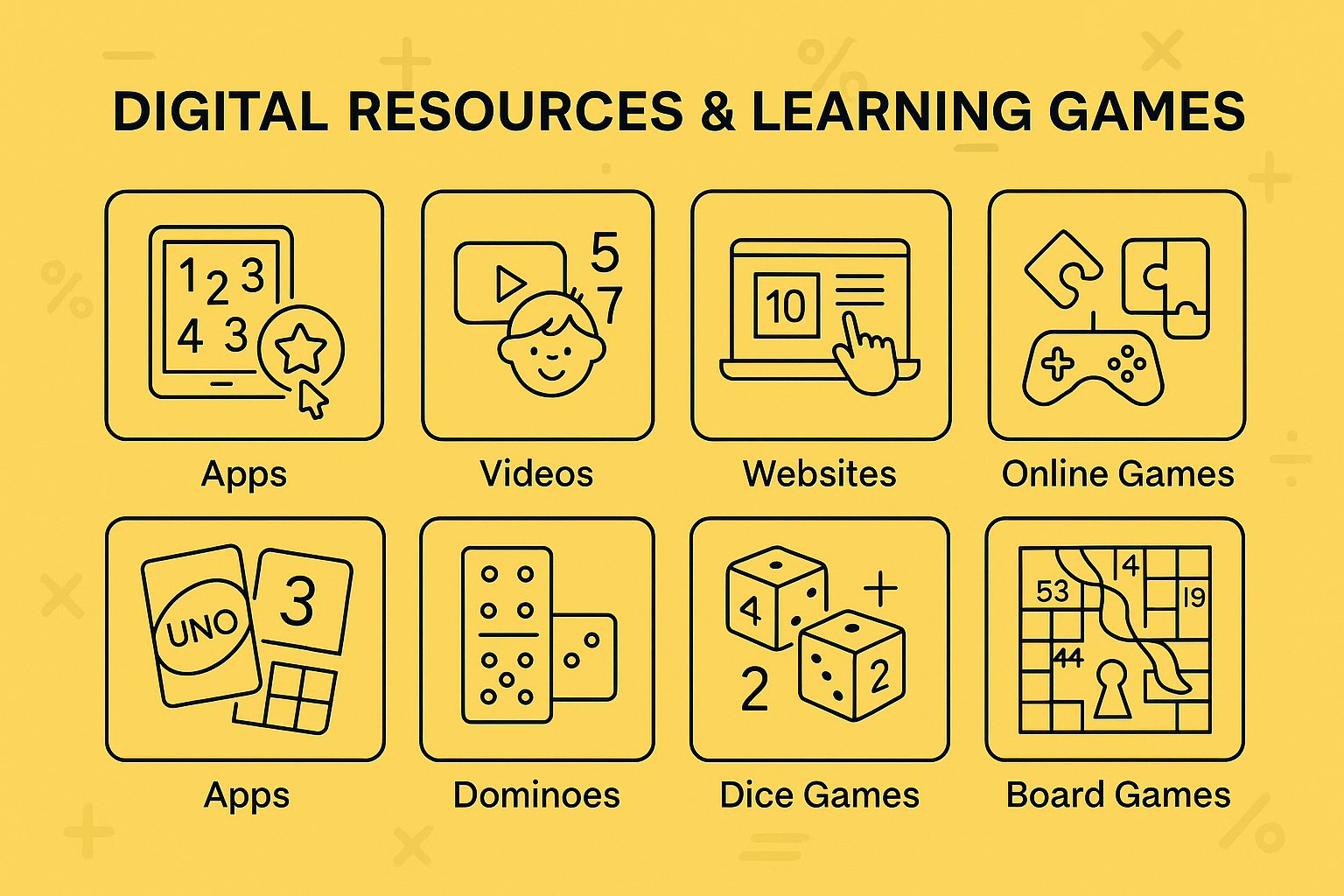
Digital tools bring math to life with animations, games, and interactive activities. When used wisely, they help you reinforce concepts in a fun and engaging way.
- Child-Friendly Math Apps
Apps designed for early learners teach counting, comparing, number recognition, patterns, and basic arithmetic. They offer instant feedback and keep your child motivated.
- YouTube Math Channels
Short, colorful math videos help your child understand number concepts visually. Songs, stories, and animations make numbers easier to grasp.
- Educational Websites
Websites with interactive activities, digital worksheets, and math stories offer structured yet playful practice.
- Online Math Games
Games that involve number matching, sequencing, addition, and puzzles help your child practice math skills while having fun.
Learning Games
Learning through play is powerful, and you can support number sense with simple family games.
- UNO
UNO helps children recognize numbers, compare values, and understand matching rules.
- Dominoes
Dominoes build number recognition, counting, and pattern awareness.
- Dice Games
Dice encourage counting, simple addition, and quick number recognition.
- Board Games Involving Numbers
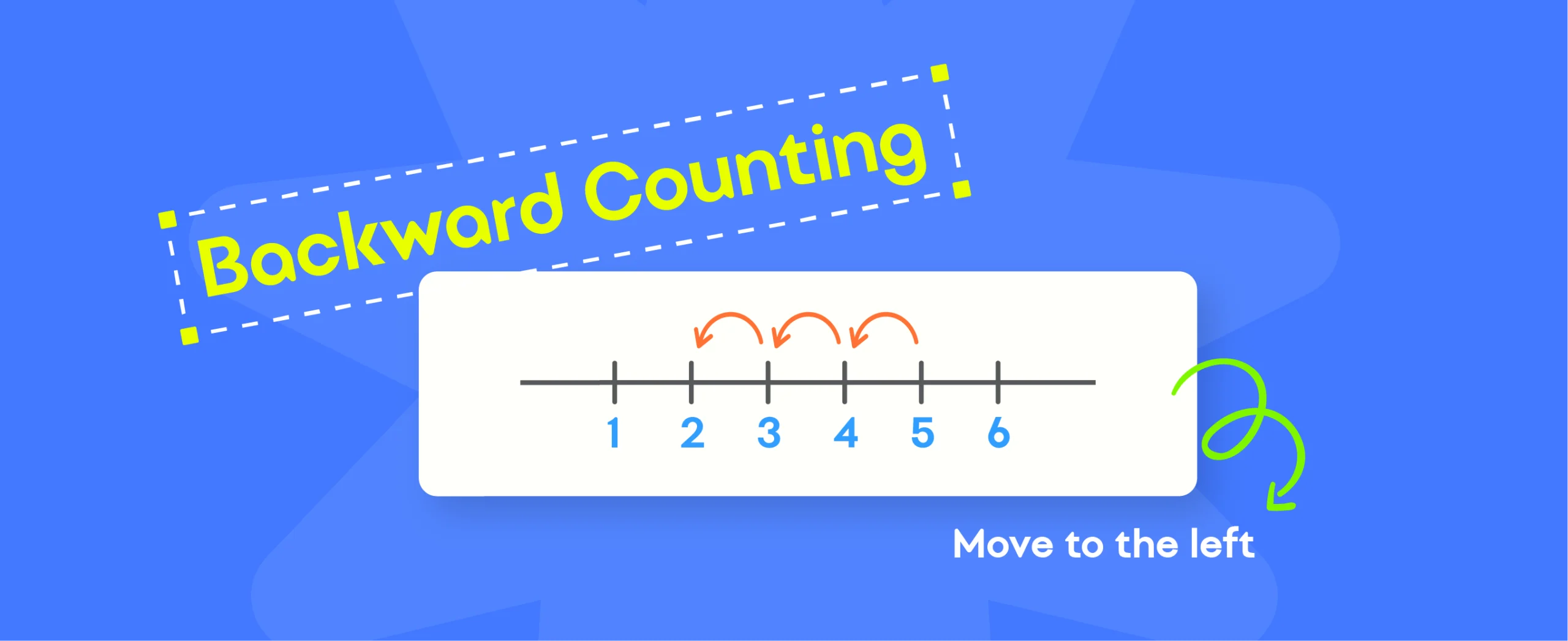
Games like Snakes & Ladders help your child practice counting, number order, and forward/backward movement on a number line.
Everyday Life Opportunities
Some of the best math learning happens naturally during your daily routines. With a little intention, you can turn everyday moments into powerful number-sense practice.
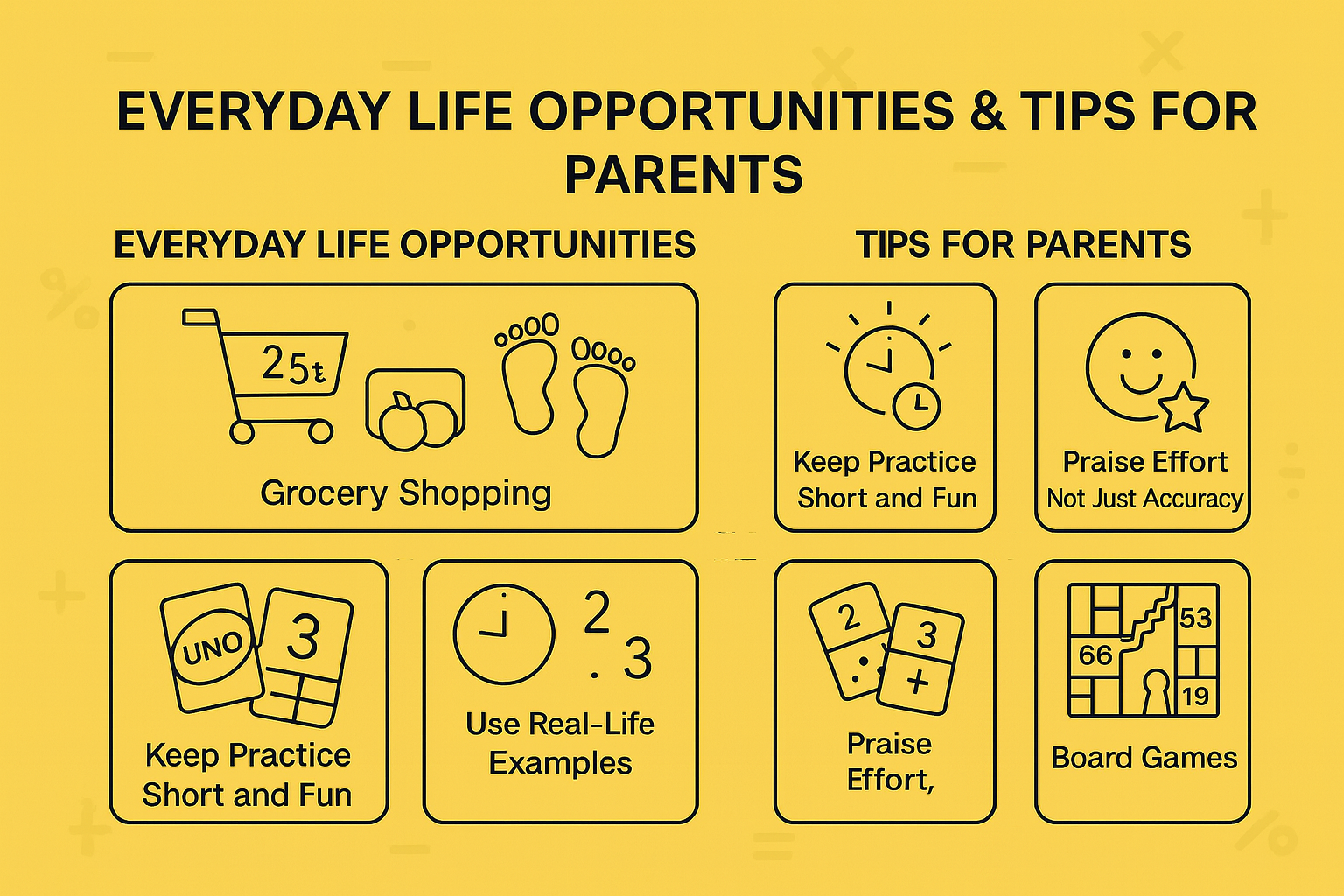
- Grocery Shopping
Let your child count fruits, compare prices, or find numbers on shelves and labels. This builds real-life math understanding.
- Counting Steps
Count steps together while walking or climbing stairs—great for forward and backward counting practice.
- Identifying Numbers in the Environment
Encourage your child to spot numbers on clocks, calendars, buses, signboards, or receipts. This strengthens number recognition and awareness.
Tips for Parents
Supporting number sense at home doesn’t have to be complicated. These simple tips help you keep learning joyful and effective.
- Keep Practice Short and Fun
Short, playful sessions keep children engaged and prevent frustration.
- Use Real-Life Examples
Connect numbers to daily routines—counting snacks, comparing items, or reading the time.
- Praise Effort, Not Just Accuracy
Celebrating effort builds confidence and resilience. It encourages your child to try new strategies and explore numbers without fear.
Make Preparing for Math Olympiad Simple!



Conclusion
Building strong number sense in Class 1 is a team effort, and you play a key role in it.
With simple daily activities, fun games, and positive encouragement, you can help your child develop strong, flexible, and lasting number sense.
If your child enjoys early math learning, you may also consider exploring the Maths Olympiad for Class 1 as an exciting next step.