 January 12, 2026
 8 min. read

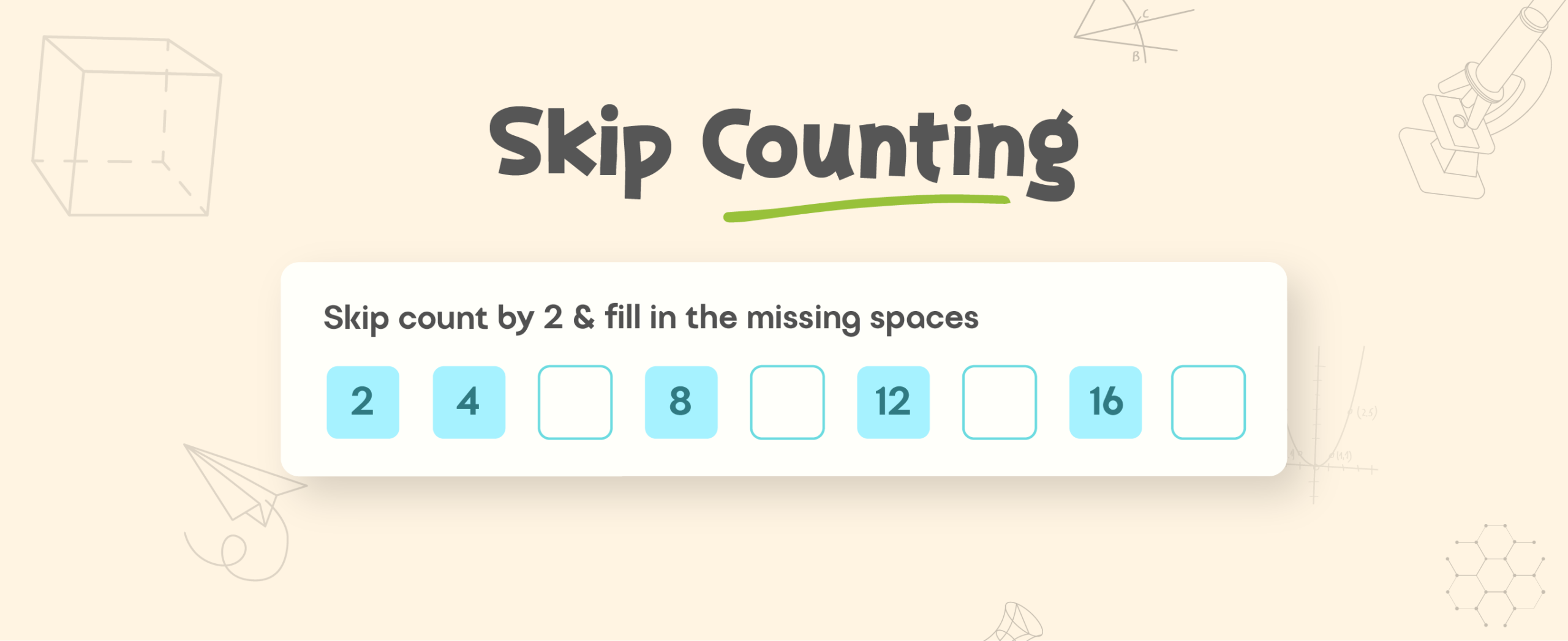
Skip counting is a simple way of counting where children count by a number other than 1, such as 2, 5, or 10.
Instead of saying 1, 2, 3, 4, children learn to count in jumps like 2, 4, 6, 8. This helps them count faster and notice number patterns.
In Class 1 math, skip counting is taught after children understand basic counting and number order. If your child is still learning how numbers are arranged, you may first explore number ordering for Class 1
Once they can count confidently, skip counting becomes the next step. It helps children recognise equal groups, use number lines, and prepare for addition and multiplication later on.
What Is Skip Counting in Mathematics?
Skip counting in mathematics is a way of counting where we jump by the same number each time instead of counting one by one.
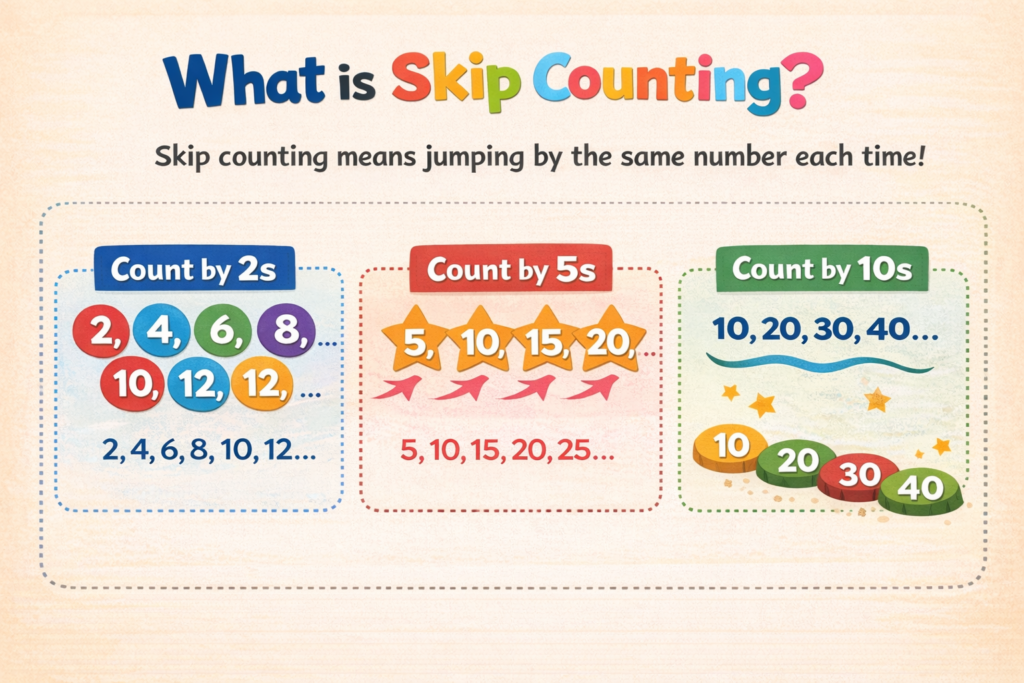
For example, counting 2, 4, 6, 8 or 5, 10, 15, 20 is skip counting. In simple words, skip counting means counting forward or backward by a number other than 1, while skipping the numbers in between.
In normal counting, we count like 1, 2, 3, 4, 5, adding 1 each time. In skip counting, we add the same bigger number again and again.
For example, when we skip count by 2, we add +2 each time (2, 4, 6, 8). When we skip count by 5, we add +5 each time (5, 10, 15, 20).
Common skip counting patterns for young learners include counting by 2s, 5s, and 10s. These patterns help children see number sequences clearly and make counting faster and easier.
Why Is Skip Counting Important in Class 1 Math?
Skip counting plays an important role in Class 1 math because it helps children understand numbers in organized jumps, such as 2, 4, 6, 8 or 5, 10, 15, 20, instead of counting only by ones.
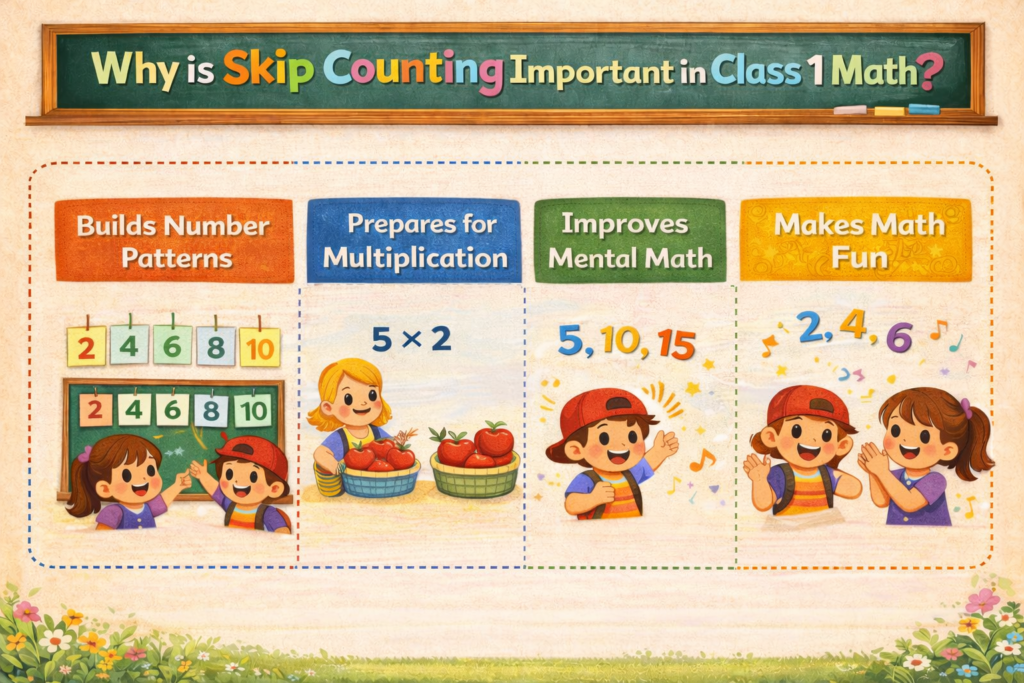
This jump counting makes numbers easier to follow and helps children see clear number patterns and sequences.
Learning skip counting builds a strong foundation for multiplication and division, where numbers are grouped into equal sets.
As children practice skip counting, they begin to recognize how numbers repeat in patterns, which improves number sense and helps them understand how numbers are connected.
Skip counting also supports mental math. Children can add faster, count large groups more easily, and make fewer mistakes by using familiar skip-counting sequences.
Counting by 2s, 5s, and 10s is quicker than counting one by one and can be taught through songs, clapping, and games, making Class 1 math more engaging, enjoyable, and fun for young learners.
These skills are part of developing number sense, which is a key goal in early math learning.
You can learn more about this in what is number sense for Class 1 and why it matters in why number sense is important for Class 1.
Types of Skip Counting
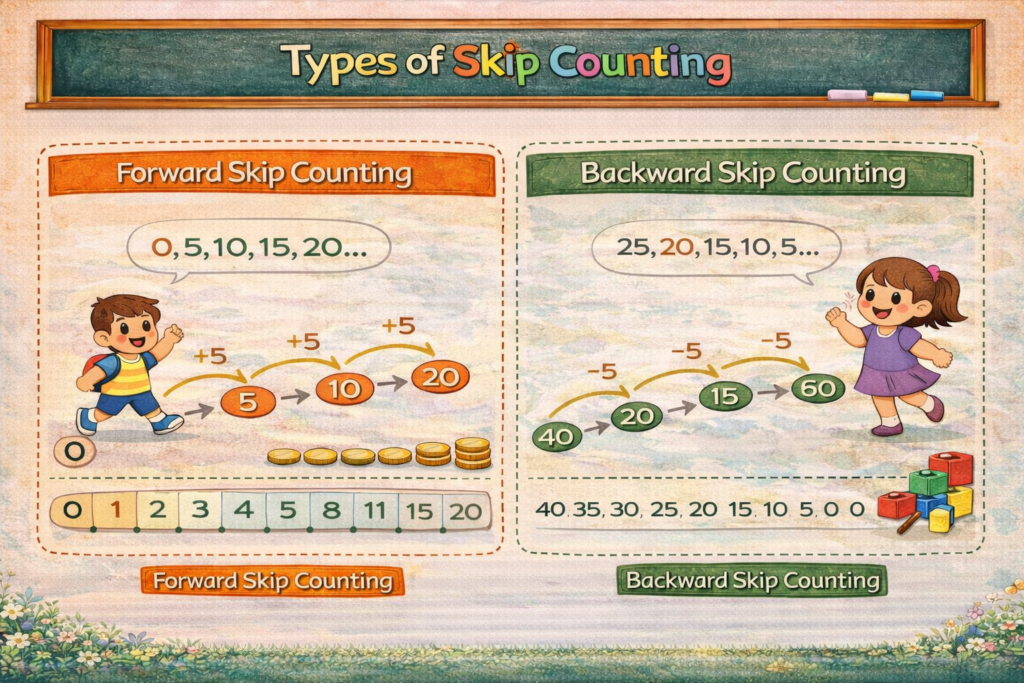
There are two main types of skip counting taught in early math: forward skip counting and backward skip counting.
Both help children understand number patterns and repeated addition or subtraction.
Forward Skip Counting
Forward skip counting means adding the same number each time to move numbers forward.
For example, starting at 0 and adding 5 each time:
0, 5, 10, 15, 20…
Here, the numbers increase in equal groups, helping children see how numbers grow in a steady pattern.
Backward Skip Counting
Backward skip counting means subtracting the same number each time to move numbers backward.
For example, starting at 25 and subtracting 5 each time:
25, 20, 15, 10, 5…
This helps children understand counting down, subtraction, and number relationships in reverse order.
Both types of skip counting build strong number sense and prepare children for addition, subtraction, and later math skills.
Simple Skip Counting Examples for Class 1
Simple skip counting for Class 1 works best when children can see, say, and move while learning.
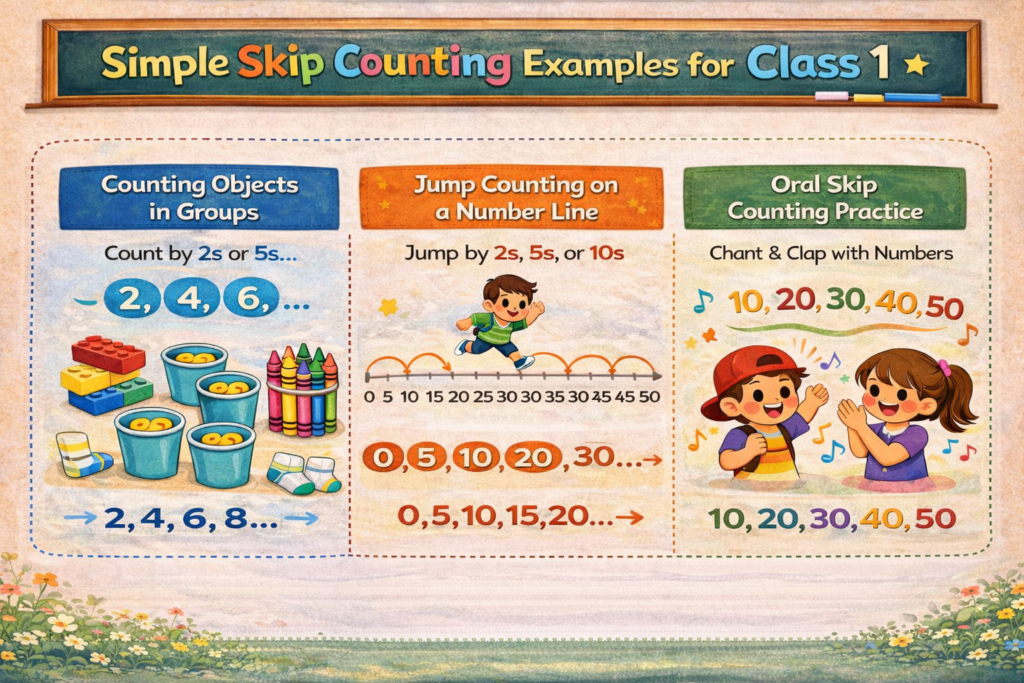
Using objects, number lines, and short oral activities helps young learners understand jump counting clearly and remember the patterns easily.
These activities are quick, fun, and effective both in the classroom and at home.
Counting Objects in Groups
Place objects into equal groups, such as 2 buttons in each cup or 5 crayons in a bundle, and count only the totals: 2, 4, 6, 8… or 5, 10, 15, 20….
Everyday items like pairs of socks, LEGO blocks, or beads help children see how numbers grow in a steady pattern.
Jump Counting on a Number Line
Draw a number line from 0 to 50 and ask children to make jumps of 2, 5, or 10. As they jump, they say the numbers they land on: 0 → 2 → 4 → 6 → 8 or 0 → 10 → 20 → 30.
Circling or colouring the landing numbers helps children clearly see the skip-counting pattern.
Oral Skip Counting Practice
Practice skip counting by chanting together: 2, 4, 6, 8, 10 or 10, 20, 30, 40, 50, while clapping, stepping, or tapping fingers.
A simple call-and-response game—where the teacher says one number and children say the next—turns skip counting into a fast, fun learning activity for Class 1 students.
ou can introduce this using a number line for Class 1 or follow the steps to draw a number line for Class 1 maths at home or in class.
What Is Skip Counting by 2, 4, 6, 8, 10?
Skip counting by 2, 4, 6, 8, and 10 means counting numbers by making equal jumps each time instead of counting one by one.
This type of skip counting helps Class 1 students understand number patterns and count faster using repeated addition.
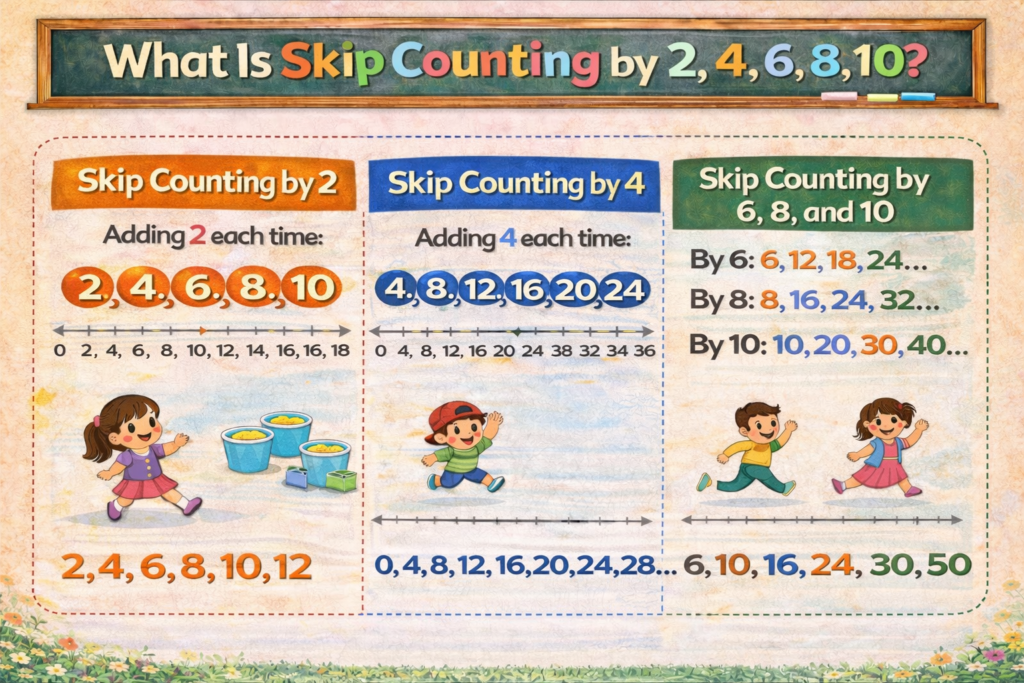
Skip Counting by 2
Skip counting by 2 means adding 2 each time. The number pattern looks like:
2, 4, 6, 8, 10, 12…
This helps children learn even numbers and is often the first skip-counting pattern taught in Class 1.
Skip Counting by 4
Skip counting by 4 means adding 4 each time. The pattern is:
4, 8, 12, 16, 20…
This helps children practice larger jumps and see how numbers increase more quickly.
Skip Counting by 6, 8, and 10
- By 6: 6, 12, 18, 24…
- By 8: 8, 16, 24, 32…
- By 10: 10, 20, 30, 40…
These patterns strengthen mental math, help with counting bigger numbers, and prepare children for multiplication tables later on.
Using Number Lines and Charts
Number lines and skip-counting charts make learning easier by showing where each jump lands.
Children can draw or hop along a number line, circling the numbers they reach, or follow rows and columns on a chart to clearly see the repeating pattern.
Visual tools help Class 1 students understand skip counting more quickly and confidently.
Fun Skip Counting Activities for Class 1
Fun skip counting activities help Class 1 students practice number patterns through movement, games, and daily routines.
These playful activities keep children engaged while strengthening skip counting skills in short, enjoyable sessions at school or at home.
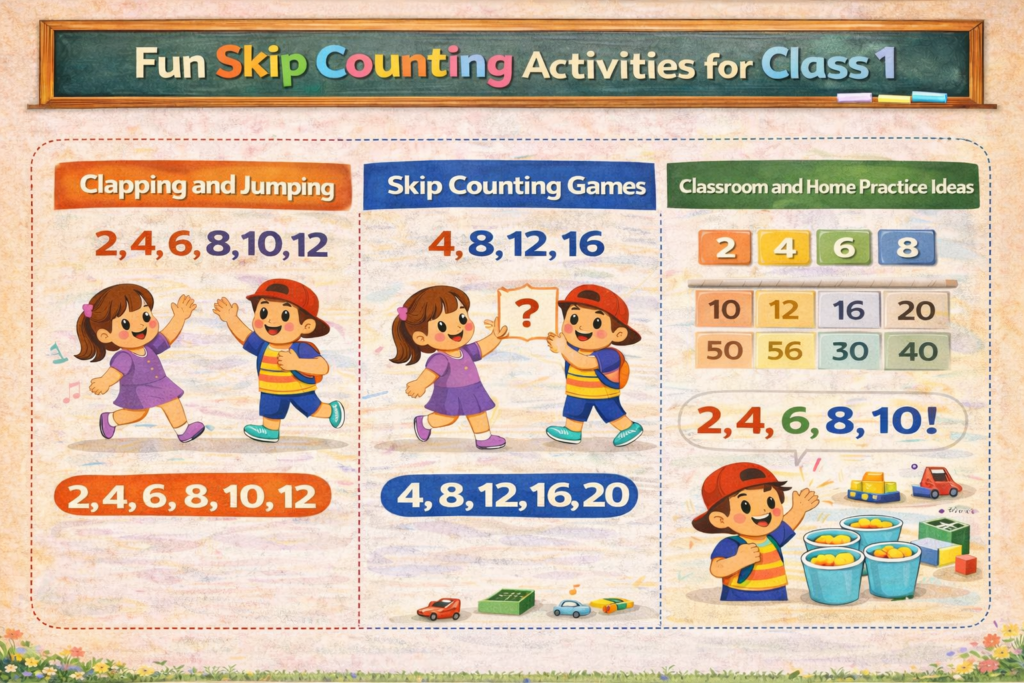
Clapping and Jumping Activities
Action-based skip counting helps children learn by moving. Students chant “2, 4, 6, 8, 10” or “5, 10, 15, 20” while clapping, stomping, or jumping once for each number.
A floor number line made with taped numbers lets children hop by 2s, 5s, or 10s, saying each number aloud as they land.
Skip Counting Games
Games make skip counting exciting and social. In High-Five by 5s, children give high-fives while counting 5, 10, 15, 20 to practice counting by 5s.
In a cover-up game, parts of a skip-counting sequence (like 10, 20, 30, 40, 50) are hidden, and children guess the missing numbers using pattern clues.
Classroom and Home Practice Ideas
Teachers can create learning stations with grouped objects, such as 2 items per cup or 5 items per section, and have children say the skip-counting numbers aloud.
At home, families can count steps by 2s, sort toys into groups of 5 or 10, or sing skip-counting songs during daily routines, making math practice natural and fun for Class 1 learners.
You can try more ideas from easy skip counting activities for Class 1 to make learning enjoyable and stress-free.
Common Mistakes Children Make While Skip Counting
Common skip counting mistakes in Class 1 often happen when children are still building strong basic counting skills or lose track of the number pattern.
With gentle guidance, clear visuals, and regular practice, most children quickly improve their skip counting accuracy.
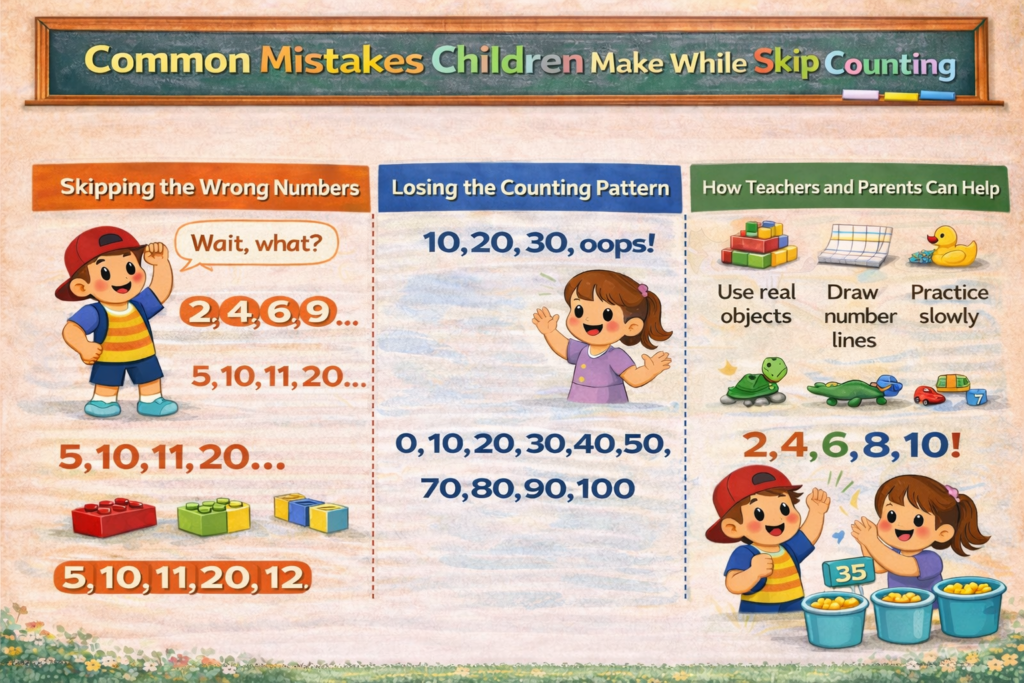
Skipping the Wrong Numbers
Some children jump by the wrong amount, such as saying 2, 4, 7, 9 instead of 2, 4, 6, 8, or mixing patterns like counting by 2s and 5s in the same sequence.
Others may double-count or miss groups when using objects, especially with larger sets, because pointing and saying numbers are not yet well coordinated.
Losing the Counting Pattern
Many children begin skip counting correctly but then return to normal counting. For example, they may say 10, 20, 30, 31, 32 instead of continuing 40, 50, 60.
This often happens when skip counting is memorized as a chant rather than understood as repeated addition.
How Teachers and Parents Can Help
Adults can support children by using a concrete-to-visual approach starting with real objects grouped in 2s, 5s, or 10s, then moving to number lines with clear jumps, and finally to numbers only.
Slow, rhythmic practice with pointing, clapping, or tapping helps maintain the pattern. Encourage children to check their counting and remind them that mistakes are a normal part of learning skip counting.
Parents and teachers can follow step-by-step methods explained in how to teach skip counting to Class 1 kids for better results.
Make Preparing for Math Olympiad Simple!



Conclusion
Skip counting is a key Class 1 math skill because it helps children see numbers as organized patterns, not just separate numbers.
Regular, playful skip-counting practice—using chants, games, and real objects—builds strong number sense, mental math, and confidence.
When practiced often in short, fun sessions at school and at home, skip counting prepares children for future topics like multiplication, fractions, and problem solving in higher grades.
For more foundational math concepts, explore our Class 1 math learning resources.