December 23, 2025
 4 min. read

The main rules for ordering numbers involve arranging them either from smallest to largest or from largest to smallest.
Children at this age are still learning how numbers relate to each other. Clear rules help them move from guessing to understanding.
If this is your child’s first time learning number order, you may want to start with what ascending and descending order mean before moving to the rules.
This guide explains the rules for ordering numbers slowly and clearly, from a parent’s and teacher’s point of view, so children can learn with confidence and joy.
Why Rules for Ordering Numbers Are Important
Children feel safe when learning has structure. Rules give them that structure.
Understanding the difference between ascending and descending order helps children follow rules more confidently.
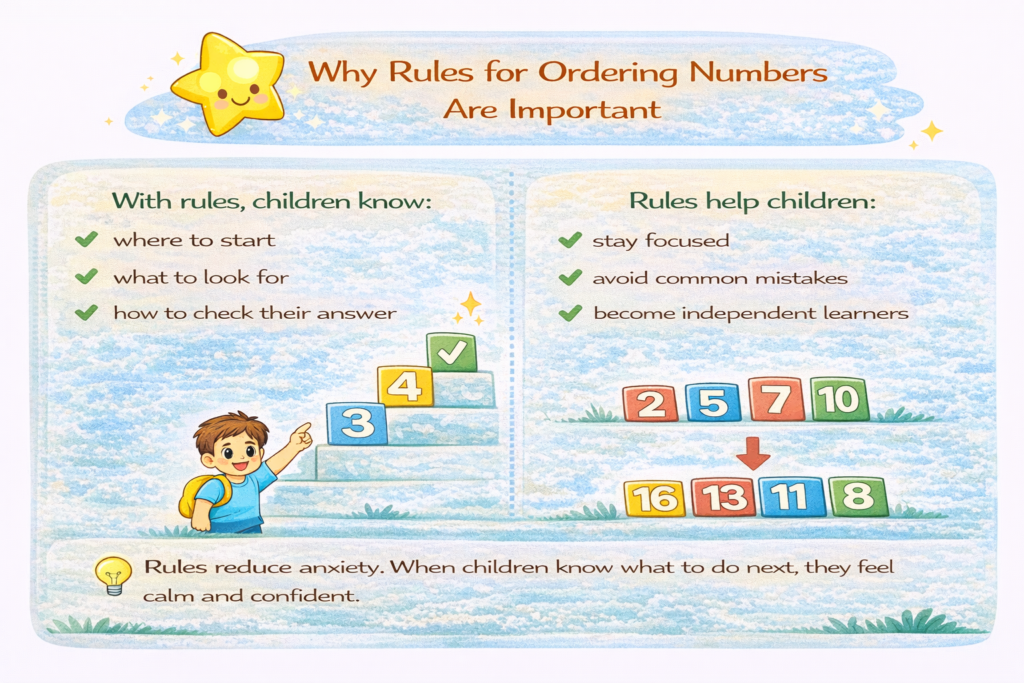
Without rules, number ordering can feel like a puzzle with no instructions. With rules, children know:
- where to start
- what to look for
- how to check their answer
Rules help children:
- stay focused
- avoid common mistakes
- become independent learners
Most importantly, rules reduce anxiety. When children know what to do next, they feel calm and confident.
Rule 1: Count the Numbers First
Before ordering numbers, children should always count how many numbers they have.
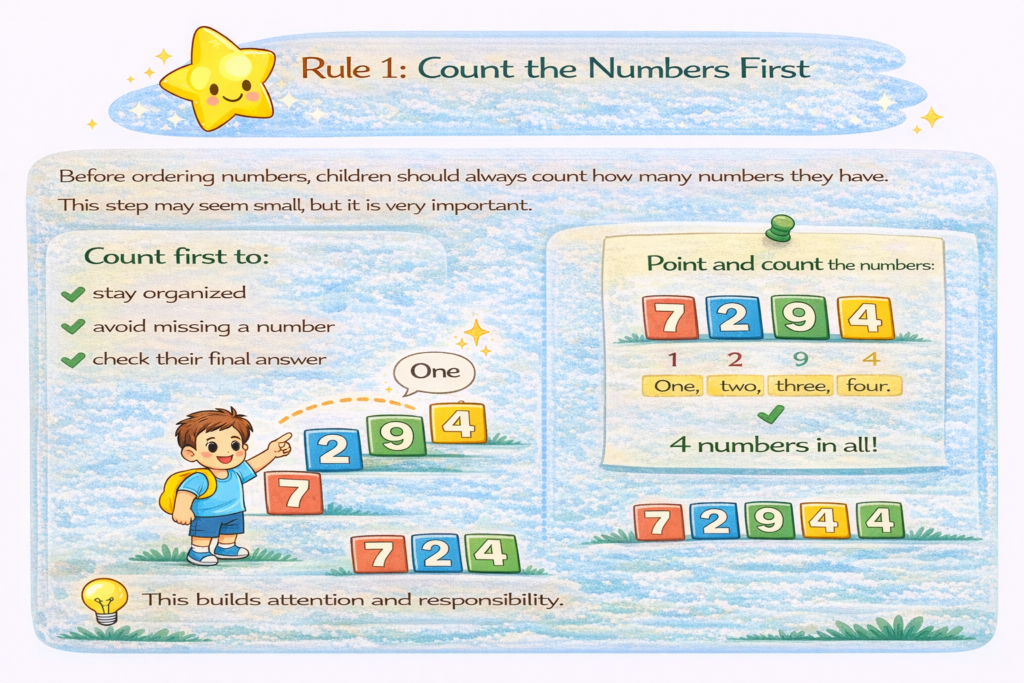
This step may seem small, but it is very important.
Counting first helps children:
- stay organised
- avoid missing a number
- check their final answer
How to Teach This Rule
Ask your child:
“How many numbers are there?”
Let them point to each number while counting.
Example:
Numbers: 7, 2, 9, 4
Child counts: “One, two, three, four.”
You can say:
“Good! So your final answer must also have four numbers.”
This builds attention and responsibility.
Rule 2: Look at the Value of Each Number
Once children know how many numbers there are, they must understand how big or small each number is.
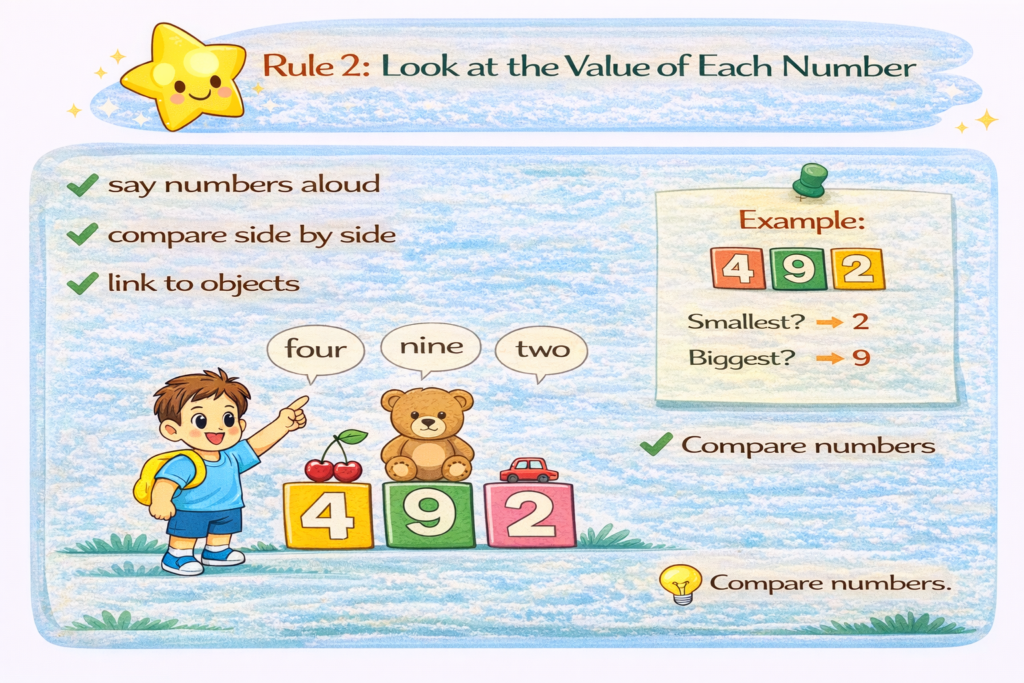
This rule teaches children to compare values instead of placing numbers randomly.
How Children Think About Number Size
Children understand number size best when they:
- say numbers aloud
- compare them side by side
- link numbers to real objects
Example:
Numbers: 4, 9, 2
Ask:
- “Which is the smallest?” → 2
- “Which is the biggest?” → 9
Encourage children to explain their thinking. Speaking helps learning. This skill is part of strong number sense, which children develop gradually through comparison and practice
Rule 3: Start from the Correct End
This rule gives direction. Without it, children often feel stuck.
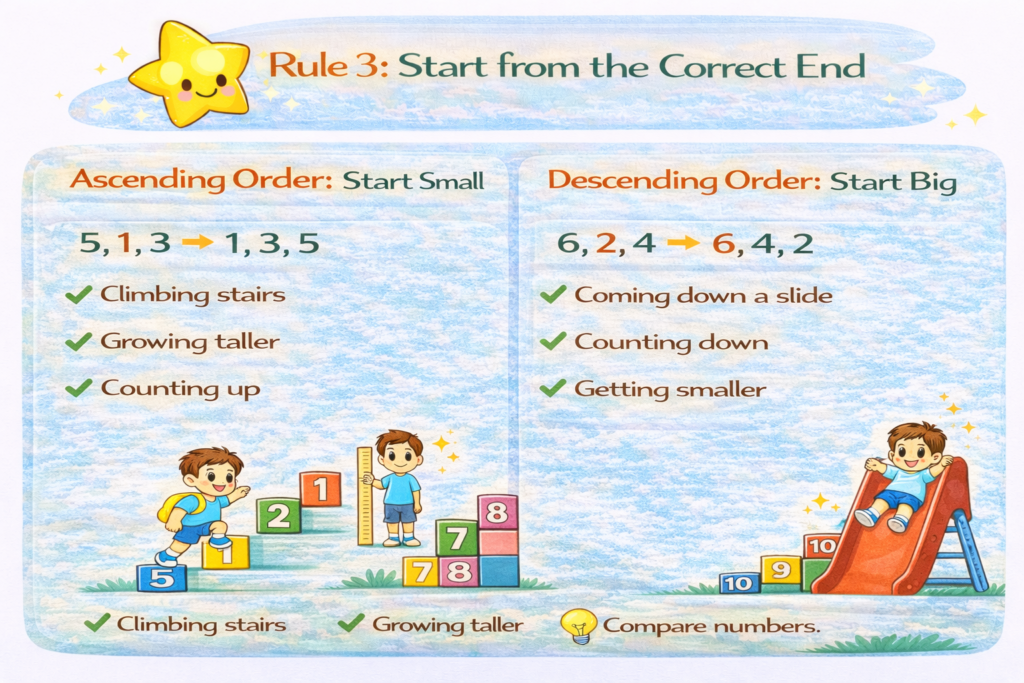
Ascending Order: Start with the Smallest Number
Ascending order means arranging numbers from small to big.
Tell children:
“We always start with the smallest number.”
Example:
5, 1, 3 → 1, 3, 5
You can relate this to:
- climbing stairs
- growing taller
- counting up
Descending Order: Start with the Biggest Number
Descending order means arranging numbers from big to small.
Tell children:
“We always start with the biggest number.”
Example:
6, 2, 4 → 6, 4, 2
Relate this to:
- coming down a slide
- counting down
- getting smaller
Using clear language like up and down helps children remember.
Rule 4: Use a Number Line When Unsure
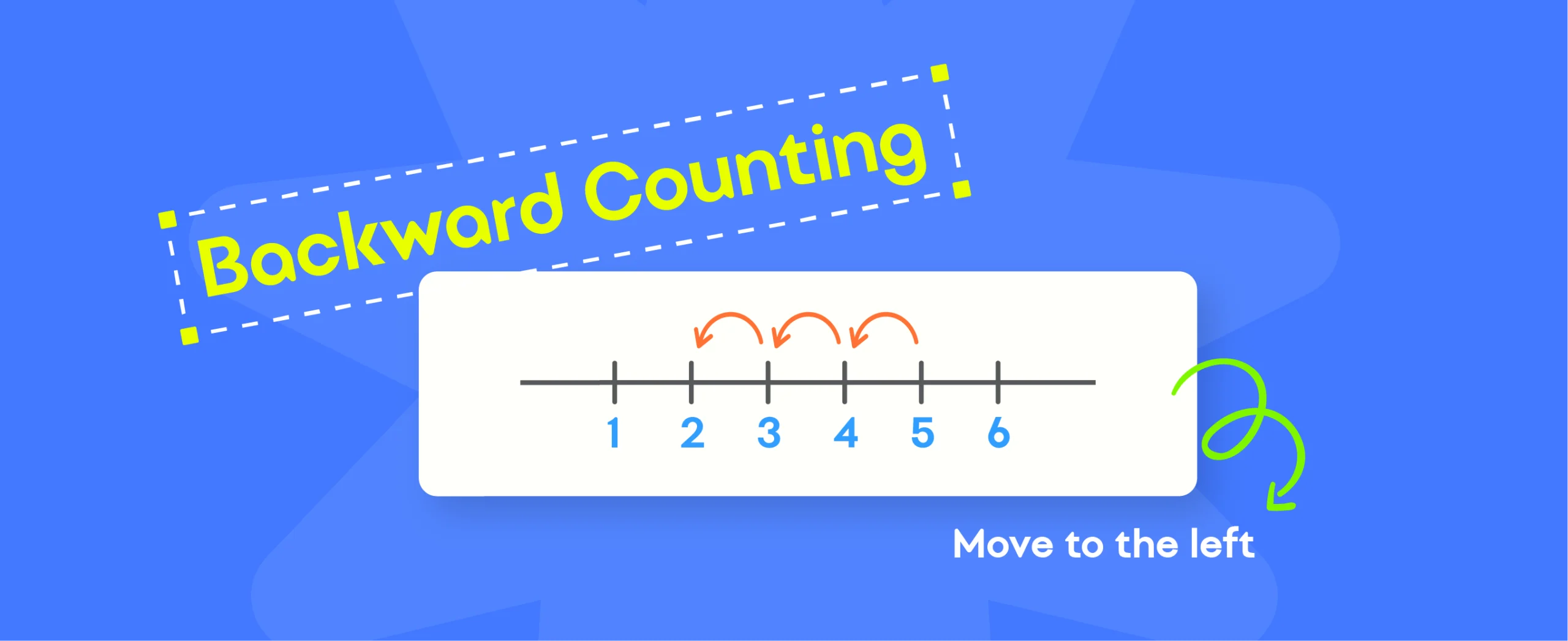
A number line helps children see the order of numbers.
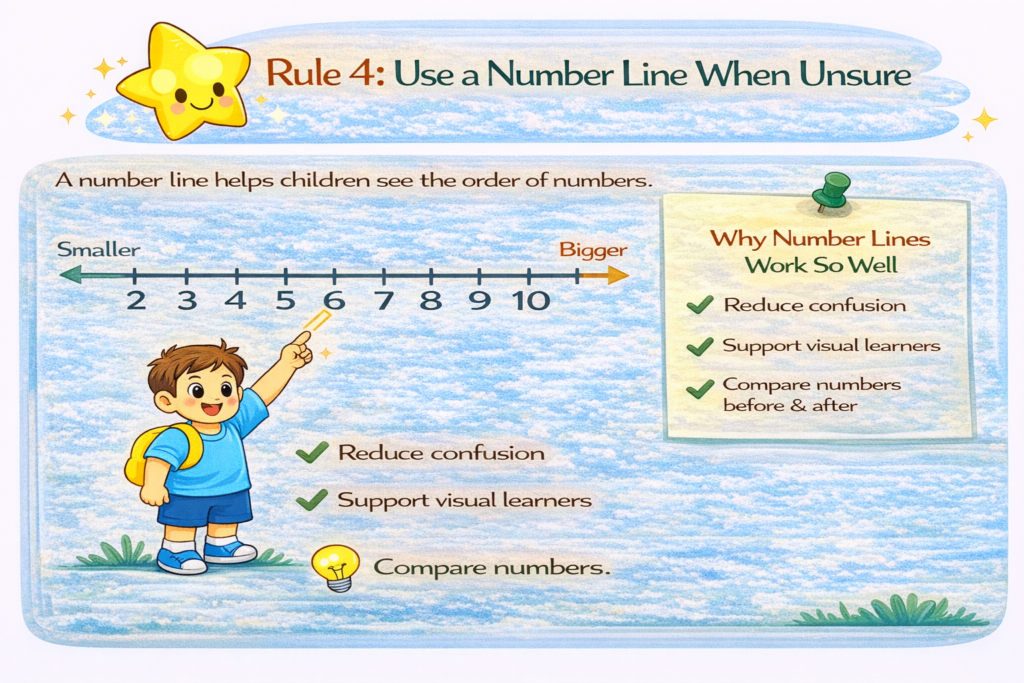
On a number line:
- numbers grow bigger as we move right
- numbers get smaller as we move left
Why Number Lines Work So Well
Number lines:
- reduce confusion
- support visual learners
- show relationships clearly
If a child feels unsure, encourage them to:
- point to each number
- see which number comes before or after
This builds independence and accuracy.
If your child struggles here, learning how number lines work in Class 1 maths can make ordering much easier.
Rule 5: Double-Check the Order
The final rule teaches children to check their own work.
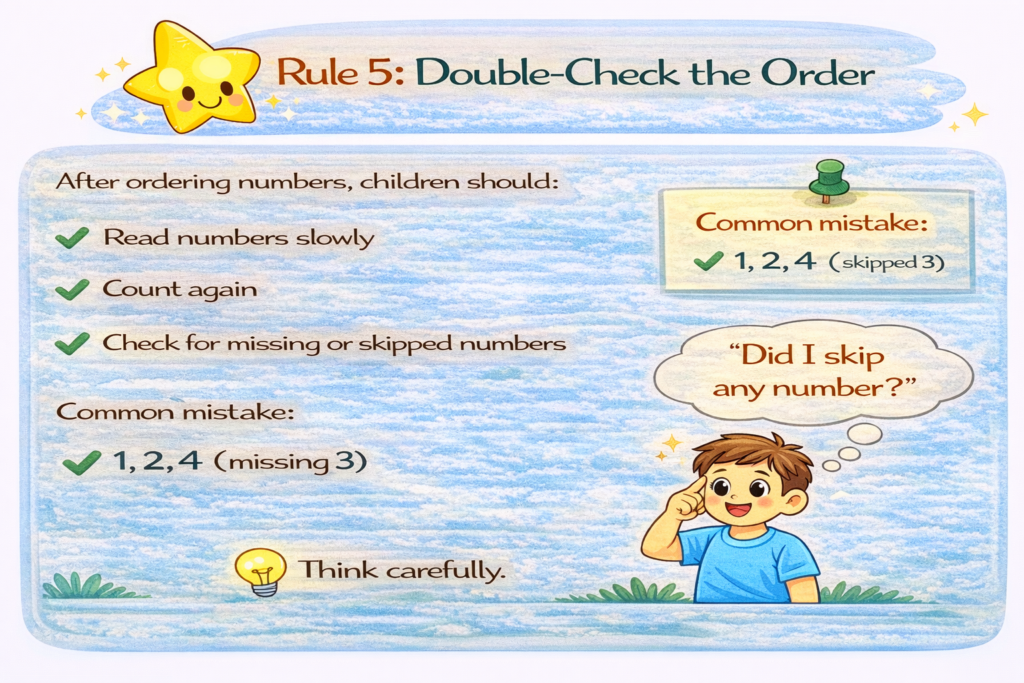
After ordering numbers, children should:
- read the numbers slowly
- count them again
- check for missing or skipped numbers
Common mistake:
1, 2, 4 (missing 3)
Teach children to ask themselves:
“Did I skip any number?”
This habit builds careful thinking that helps in all subjects.
Putting All the Rules Together Step-by-Step Example
Example: Ordering Numbers in Ascending Order
Numbers: 3, 8, 1, 5
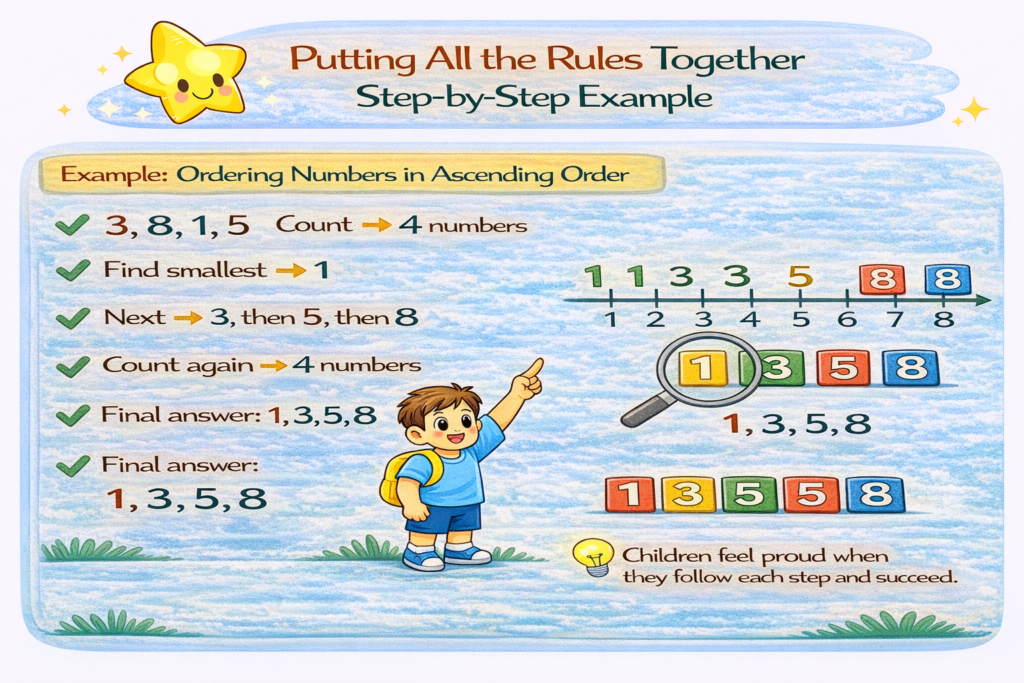
- Count → 4 numbers
- Find smallest → 1
- Next → 3, then 5, then 8
- Check on number line
- Count again → 4 numbers ✔
Final answer: 1, 3, 5, 8
Children feel proud when they follow each step and succeed.
Common Errors and Gentle Fixes
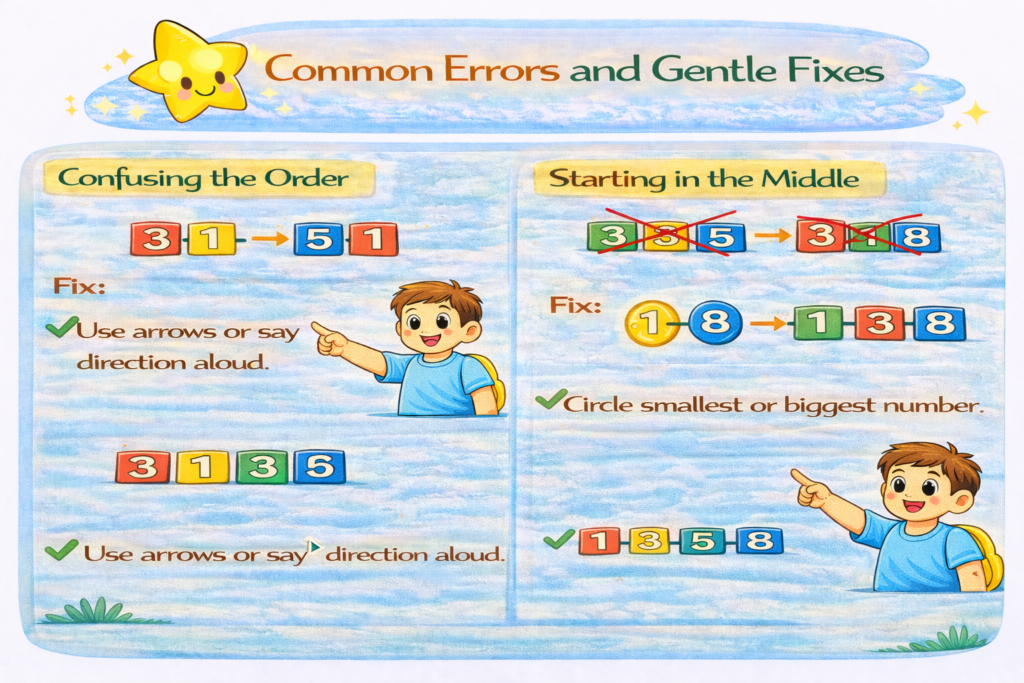
Confusing the Order
Children may start correctly but change direction.
Fix:
Use arrows or say the direction aloud while ordering.
Starting in the Middle
Some children pick a number that feels “comfortable” instead of correct.
Fix:
Ask them to circle the smallest or biggest number first.
Make Preparing for Math Olympiad Simple!



Final Thoughts
The rules for ordering numbers do more than teach maths. They teach children:
- how to think step by step
- how to check their work
- how to feel confident solving problems
When children learn number ordering through clear rules, maths becomes friendly and predictable, not scary.
With patience, practice, and encouragement, children build a strong foundation that supports all future learning.